SafeLine Emergency Phone Communication

The SL6 is a powerful emergency phone platform designed for machine rooms or shafts – future-ready and now supporting VoIP communication over 4G and 5G networks.
Read moreBook a demo

Future-Proof Safety for Elevators

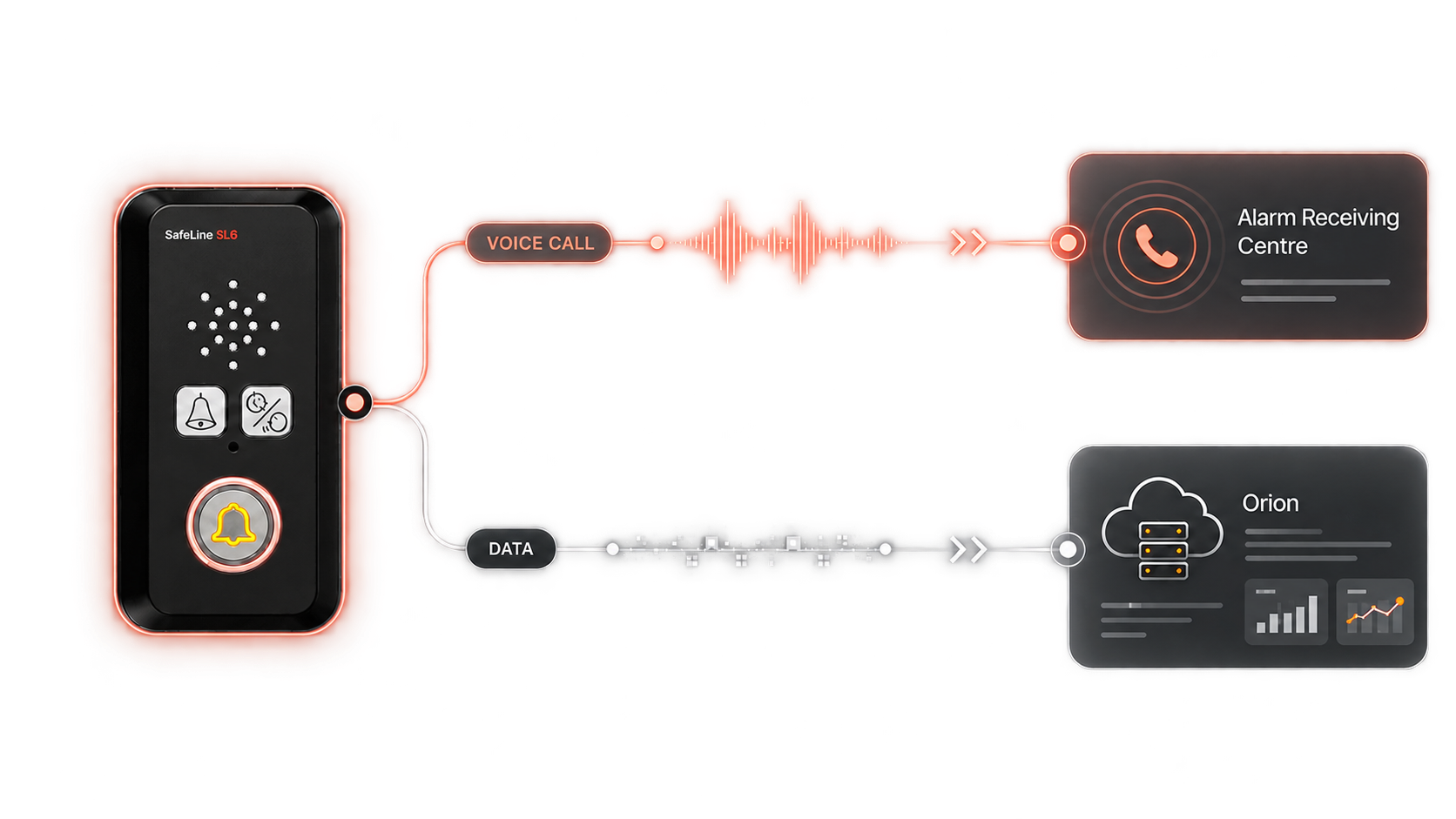
SL6 combines traditional emergency communication with fire intercom in a single unit, ensuring maximum reliability with automatic fallback between 4G/5G/VoIP and landline.

With its modular design and unmatched reliability, the SafeLine Emergency Phone Communication system secures both compliance and safety – making it the trusted choice for modern and future lift installations.

Installation is simple and efficient, thanks to wireless configuration via the SafeLine mobile app, Lynx II – no computer required.

SafeLine Orion – monitoring lifts

Key features of SL6

  • Future-proof communication technology
  • Fire intercom and emergency phone in one system
  • Supports up to 6 voice stations per system
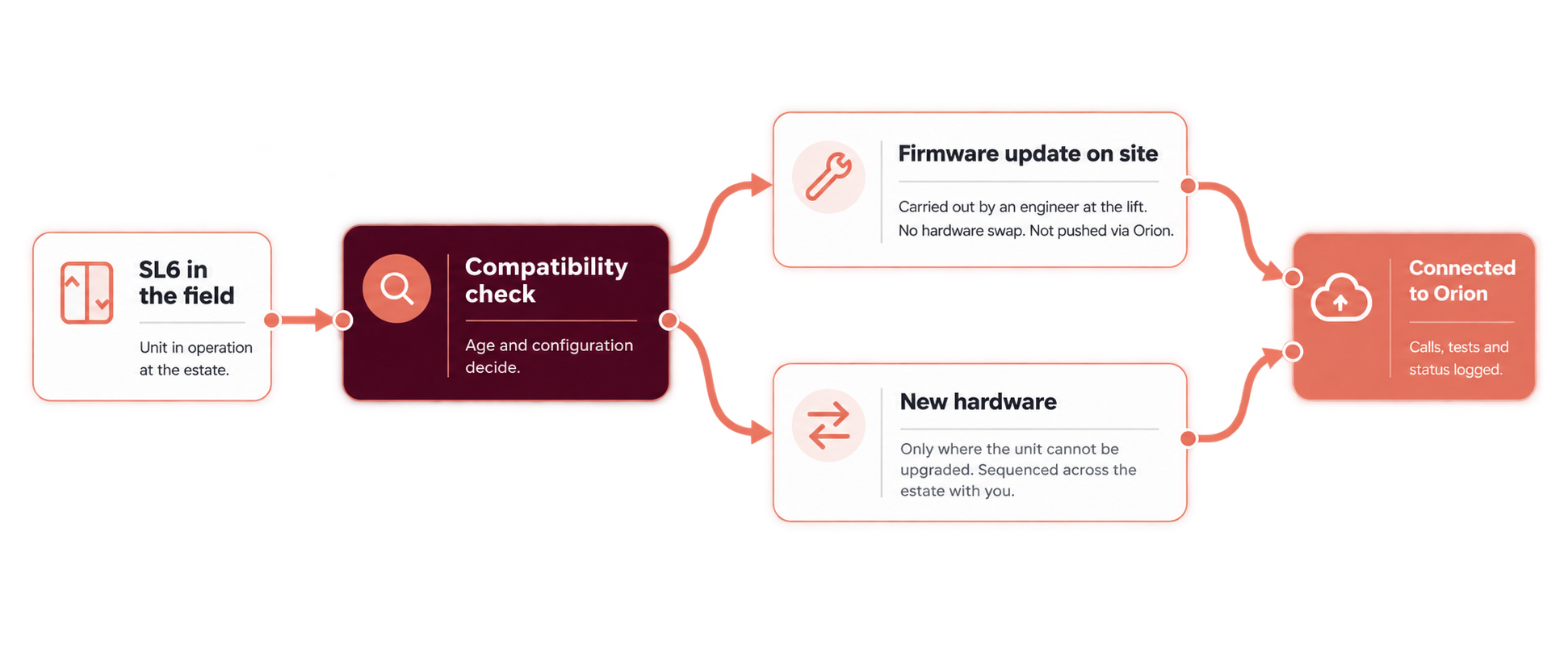
  • Remote monitoring via ORION
  • Easy wireless configuration with the mobile app
  • Brand-independent – compatible with all elevators and alarm centers


Additional Components

    Fire Intercom Entrance Station

    • Complies to EN81-72
    • Key switch for Fire mode activation
    • Flush or Surface Mount


    SL6 Voice Station (Car-Top / Lift Pit)

    •  Safe emergency communication for service technicians
    • Integrated emergency light
    • Robust design


    SL6 Voice Station (Weather-Protected)

    • Outdoor-ready durability
    • Quick installation


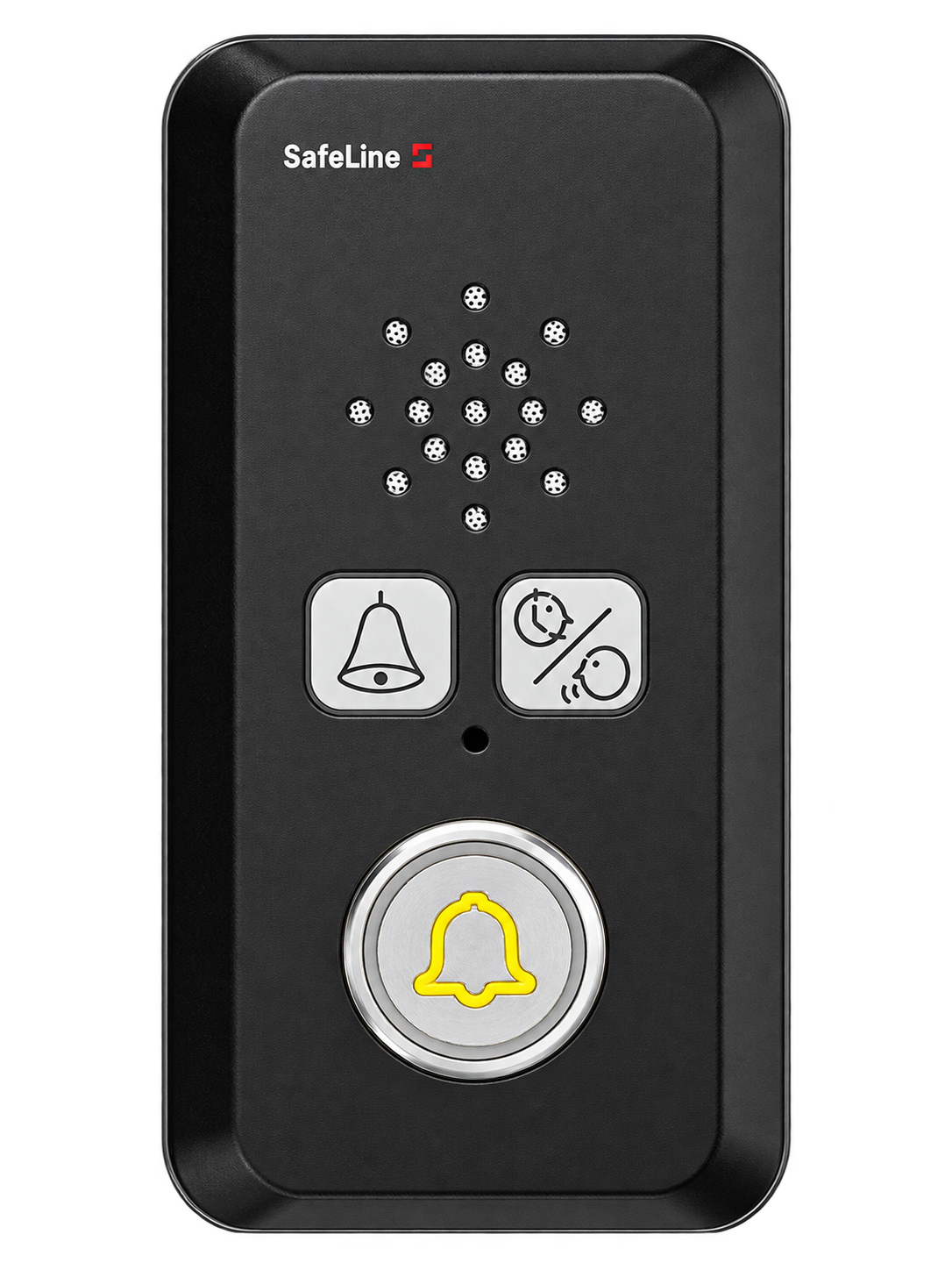
    Dark Matter Black Voice Station

    • Slim and discreet design
    • Easy installation
    • EN81-28 compatible pictograms

    SL6-4G Main Unit

    Technical specifications

    Properties
    • Future-ready connectivity

    • Dual-purpose system

    • Multiple connection options: 4G/5G/VoIP

    • For all types of buildings
    • Connect up to six voice stations
    • Built-in wireless configuration
    • Intercom/Fire intercom support
    • Wide range of voice stations
    • Battery backup + automatic battery condition test
    • Fulfils EN81-28 and EN81-70
      Electrical data
      • Power Supply: 230 VAC
      • Power Supply LED: 30W
      • Battery. 12 VDC, 1,2 Ah
      • Inputs: 10-30 VDC, 5 mA
      • Effect: 230VAC, 6-10W
      • Current Consumtion: 25 W
      • Output Voltage: 12VDC
      • IP: IP20
      • Antenna Connection: SMA
      Included in package

      Manual Modular cable, JST 6 + 2 (flat), 5-meter L-Key pin Hexagon 2.5mm, Antenna

      Watch the movie

      FAQ

      Why do we lack transparency in lift condition and service delivery?

      Short answer: Because lift data and service documentation are often fragmented across suppliers, sites, and formats—making it hard to verify what’s happening and why.

      Details:

      • Information lives in emails, PDFs, service portals, and site logs.

      • Mixed fleets (different brands/ages) make consistent visibility harder.

      • Outcomes become hard to benchmark across buildings.

      What does “portfolio control” mean in practice?

      Short answer: Portfolio control means you can view lift performance and issues consistently across buildings, not one site at a time.

      Details:

      • One reporting structure across the whole estate

      • Easier prioritization (critical buildings, recurring issues, worst performers)

      • Fewer “blind spots” when staffing changes or suppliers rotate

      How do we get a “single source of truth” across multiple buildings?

      Short answer: Standardise how lift events, actions, and outcomes are captured so reporting is consistent and comparable across the portfolio.

      Details:

      • Use one common reporting model for all sites

      • Ensure every action has: what/when/why/result

      • Keep owner-accessible records independent of any single supplier portal

      Why do maintenance costs keep rising and still feel unpredictable?

      Short answer: Costs become unpredictable when issues are detected late, repairs are reactive, and evidence is insufficient to prevent repeat callouts.

      Details:

      • Breakdowns create premium (urgent) work and disruption costs

      • Root causes can be missed when documentation is inconsistent

      • Hard to forecast when you can’t see trends portfolio-wide

      How do we reduce unplanned repairs without increasing risk?

      Short answer: Move from “react after failure” to “act on early signals” with prioritized interventions and verified outcomes.

      Details:

      • Identify recurring fault patterns (by building/lift type)

      • Prioritize actions by criticality (hospital vs office vs residential)

      • Track whether a fix actually reduced incidents

      How do we reduce unnecessary maintenance visits?

      Short answer: Base visits on need and evidence—so the right work happens at the right time, with fewer wasted callouts.

      Details:

      • Use consistent triggers for “send a technician.”

      • Validate outcomes: what changed after the visit?

      • Reduce repeat visits by documenting the root cause and resolution

      What’s the fastest way to reduce downtime across the estate?

      Short answer: Improve early detection, triage faster, and prioritize fixes using consistent portfolio visibility.

      Details:

      • Downtime reduction is usually a process problem, not only a technical one

      • “Same day visibility” beats “end-of-month reporting.”

      • Benchmark worst performers and address systemic causes

      How do we prioritize actions when multiple lifts have issues?

      Short answer: Rank issues by safety/criticality, building impact, and recurrence—then allocate service capacity accordingly.

      Details:

      • Critical buildings first (healthcare, mobility access, public sites)

      • Repeat incidents next (high recurrence = high cost)

      • Then optimize the “long tail” of low-frequency issues

      How do we reduce tenant complaints related to lifts?

      Short answer: Reduce recurring faults and improve response predictability—then communicate transparently when issues occur.

      Details:

      • Track complaint drivers (type, building, time)

      • Reduce repeat callouts (same issue returning)

      • Provide consistent status updates internally so front-line teams can respond

      Why is compliance harder with multiple buildings?

      Short answer: Because evidence is scattered and practices vary between sites and suppliers, making it difficult to demonstrate control consistently.

      Details:

      • Different service providers = different documentation styles

      • Local “workarounds” emerge over time

      • Audit readiness becomes manual and fragile

      What compliance reporting should we be able to produce quickly?

      Short answer: You should be able to show what was done, when, why, and with what outcome—per lift and across the portfolio.

      Details:

      • Service/incident history per asset

      • Proof of corrective actions and follow-up

      • Trends and risk areas across buildings

      How do we reduce compliance work that’s currently manual?

      Short answer: Standardize documentation and reporting so evidence is created as part of operations—not retrofitted before audits.

      Details:

      • Define mandatory fields for every action/event

      • Ensure ownership: who signs off and who stores evidence

      • Use consistent naming and categorization across the estate

      What do boards/management usually want to know about lifts?

      Short answer: They want evidence of risk control, downtime trends, cost drivers, and whether suppliers are delivering measurable improvement.

      Details:

      • Portfolio KPIs (downtime, incidents, repeat callouts)

      • Cost predictability (planned vs unplanned)

      • Risk hotspots (buildings, lift types, recurring issues)

      How do we stop living in spreadsheets and email threads?

      Short answer: Create a repeatable reporting system that captures events and outcomes consistently and exports portfolio-ready views.

      Details:

      • Agree on one taxonomy (fault types, priorities, outcomes)

      • Require documentation completeness (no “closed” without result)

      • Make reporting a routine, not a monthly scramble

      Can we benchmark performance across buildings and suppliers?

      Short answer: Yes—if metrics are consistent and data access is independent, benchmarking becomes objective instead of anecdotal.

      Details:

      • Standardize KPIs and definitions

      • Compare “repeat incidents per lift” and “time to restore service”

      • Use trend lines, not single incidents

      What is “manufacturer lock-in” in lift operations?

      Short answer: Lock-in happens when data access, tooling, and processes depend on one manufacturer ecosystem, limiting your freedom to change suppliers or standardize reporting.

      Details:

      • Switching costs become operational, not just contractual

      • Mixed fleets become harder to manage consistently

      • Innovation depends on one vendor's roadmap

      How do we avoid lock-in while keeping a good supplier relationship?

      Short answer:
      Keep relationships collaborative, but ensure your organization retains independent visibility, consistent reporting, and decision control.

      Details:

      • Independence reduces conflict—because decisions rely on evidence

      • Suppliers can still deliver; you just verify outcomes consistently

      • Helps long-term trust through shared facts

      What does “open protocol” mean for a property owner?

      Short answer: Open protocol typically means better interoperability and fewer dead-ends when integrating with your building systems or changing vendors.

      Details:

      • Easier integration into broader property tech stacks

      • Less dependence on proprietary portals

      • More flexibility as your portfolio evolves

      What cybersecurity questions should IT ask before connecting lift assets?

      Short answer: Ask how data is protected, who has access, what’s integrated, and how risks are controlled and documented.

      Details:

      • Encryption and secure authentication

      • Role-based access and audit logs

      • Clear data ownership and retention policy

      • Security documentation for internal risk assessment

      Who owns the operational lift data?

      Short answer: For portfolio governance, property owners should retain access and control over operational data so decisions and reporting remain independent.

      Details:

      • Enables benchmarking and supplier accountability

      • Reduces switching friction

      • Supports consistent governance across sites

      How should we think about GDPR/NIS2 in this context?

      Short answer: Treat connected lift data as governed operational data: define lawful basis (if personal data exists), minimize exposure, and document security controls and responsibilities.

      Details:

      • Data minimization and purpose limitation

      • Clear processor/controller roles (where applicable)

      • Internal security review and documentation

      (This is governance guidance, not legal advice.)

      How do we roll out across 24+ lifts without disrupting operations?

      Short answer: Start with a representative pilot, establish baseline KPIs, then scale building-by-building with a standard installation and reporting playbook.

      Details:

      • Pilot mix: different brands/ages/traffic profiles

      • Baseline first: downtime, incident rate, repeat callouts

      • Scale after measurable improvement and stakeholder buy-in

      What’s the difference between non-invasive and invasive installation models?

      Short answer: Non-invasive approaches aim to minimize disruption and changes to core systems, while invasive approaches may enable deeper integration but require more planning and approvals.

      Details:

      • Choose based on risk appetite, lift type, and governance requirements

      • Document change management and safety considerations

      • Align with compliance and supplier agreements

      How do we get buy-in across Operations, Procurement, Technical/Compliance, and IT?

      Short answer: Tie the rollout to each stakeholder’s measurable outcomes: fewer disruptions (Ops), clearer supplier accountability (Procurement), audit readiness (Compliance), and controlled risk (IT).

      Details:

      • Use shared KPIs across stakeholders

      • Agree on definitions (what counts as “downtime”)

      • Publish a simple governance model (who decides what)

      Why should we consider SafeLine to solve our key lift-portfolio challenges—lack of service transparency, rising unplanned costs, compliance complexity, and vendor lock-in?

      Short answer: SafeLine is positioned to help property owners improve transparency, reduce disruptions, and maintain flexibility through faster deployment options and interoperability (e.g., open protocol), without forcing a single-vendor operating model.

      Details:

      • Emphasis on practical rollout (short installation time)

      • Flexibility options (non-invasive vs invasive models)

      • Focus on interoperability and long-term control

      Can we benchmark performance across buildings and suppliers?

      Short answer: Yes—if metrics are consistent and data access is independent, benchmarking becomes objective instead of anecdotal.

      Details:

      • Standardize KPIs and definitions

      • Compare “repeat incidents per lift” and “time to restore service”

      • Use trend lines, not single incidents

      Experience SafeLine Orion – book a demo.

      Explore how real-time lift monitoring can improve efficiency, reduce costs, and put you in control.
      Book a demo