
Get your lift emergency phone ready for the 2027 switch-off.
The analogue phone network is being switched off on 31 January 2027. Whatever lift emergency telephone you have today, we will help you work out what your buildings actually need to stay connected – whether that means new hardware or not. Book a short call and we will meet you where you are.
A no-obligation call to review your situation ahead of the 31 January 2027 switch-off.
Lift communication since 1995 · Designed to support EN81-28 requirements · Works alongside a wide range of lift brands · UK-based support
Whatever you have today, there is a route to being ready.
The SafeLine SL6 is a modular lift emergency telephone that supports emergency voice calls over 4G VoLTE. When connected to SafeLine Orion, it also gives you a digital, time-stamped record of alarm identification, EN81-28 test-call results and relevant status information.
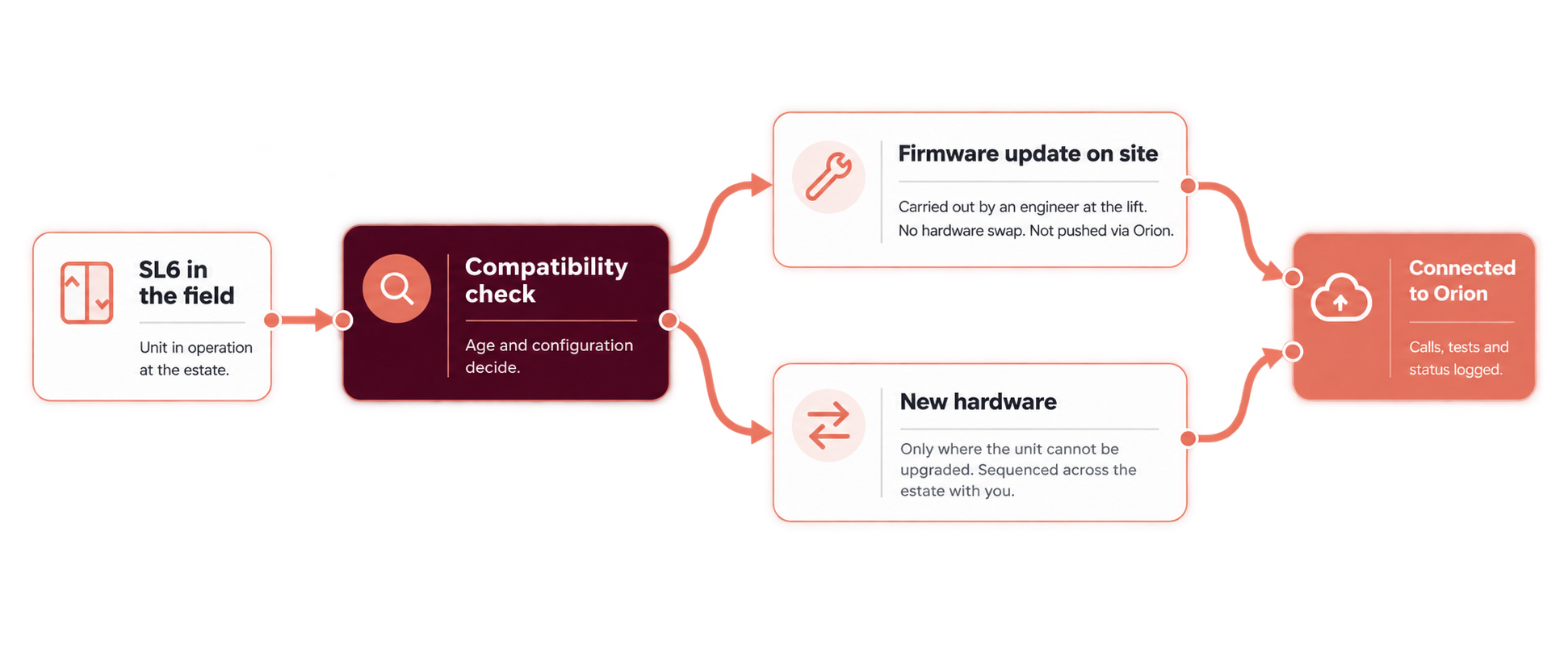
Many existing SL6 units can be upgraded through an on-site firmware update. Where that is not possible, we can help you identify a suitable replacement route.
Configuration is completed wirelessly through SafeLine LYNX, with no laptop required.
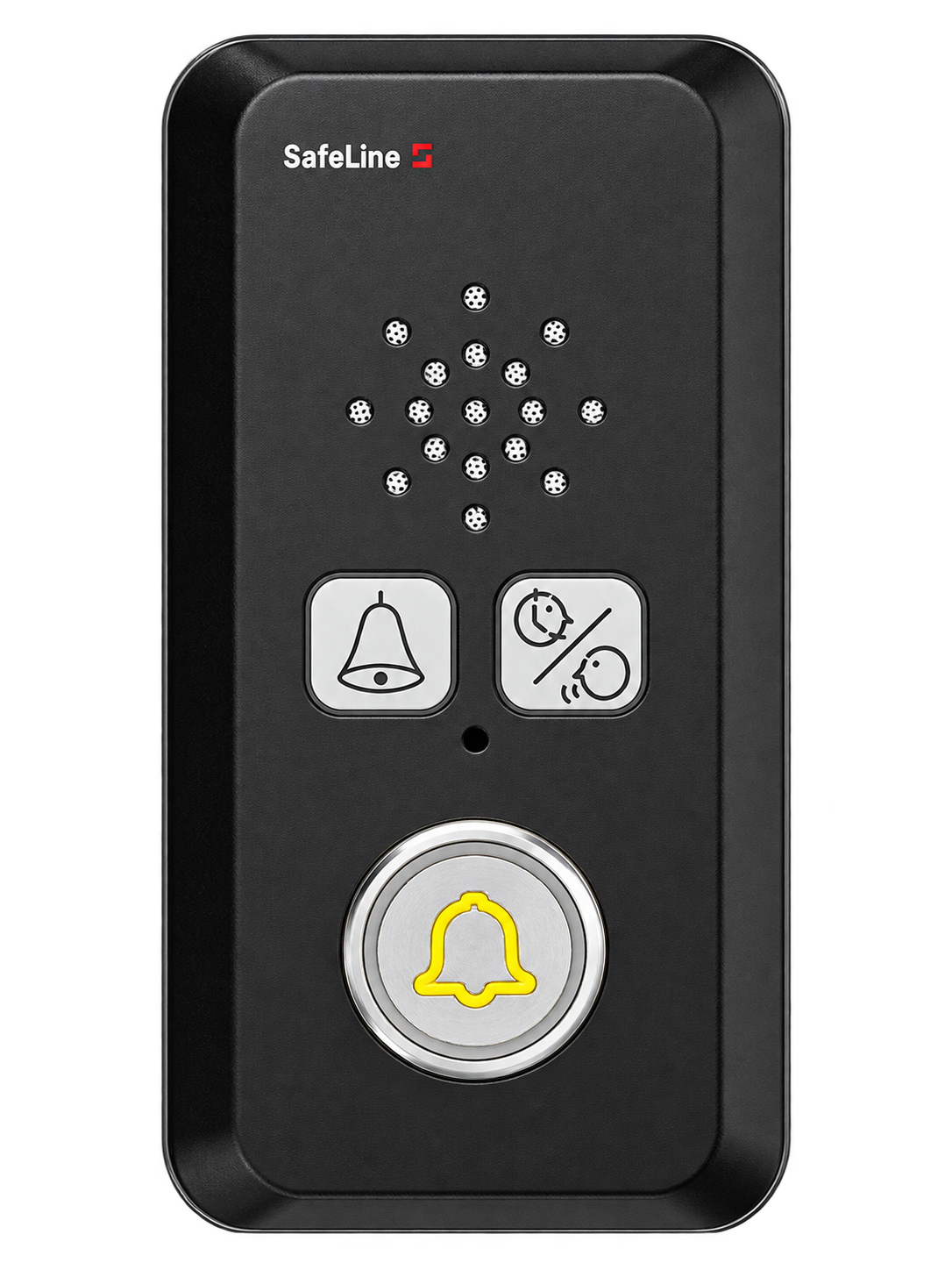
Key features of SafeLine SL6
- Emergency voice calls over 4G VoLTE to your chosen Alarm Receiving Centre
- Digital alarm identification and EN81-28 test calls logged in SafeLine Orion
- Supports up to six voice stations per system
- Wireless configuration through SafeLine LYNX, with no laptop required
- Compatible with lifts and Alarm Receiving Centres across different brands
- UK-based support throughout the product lifetime
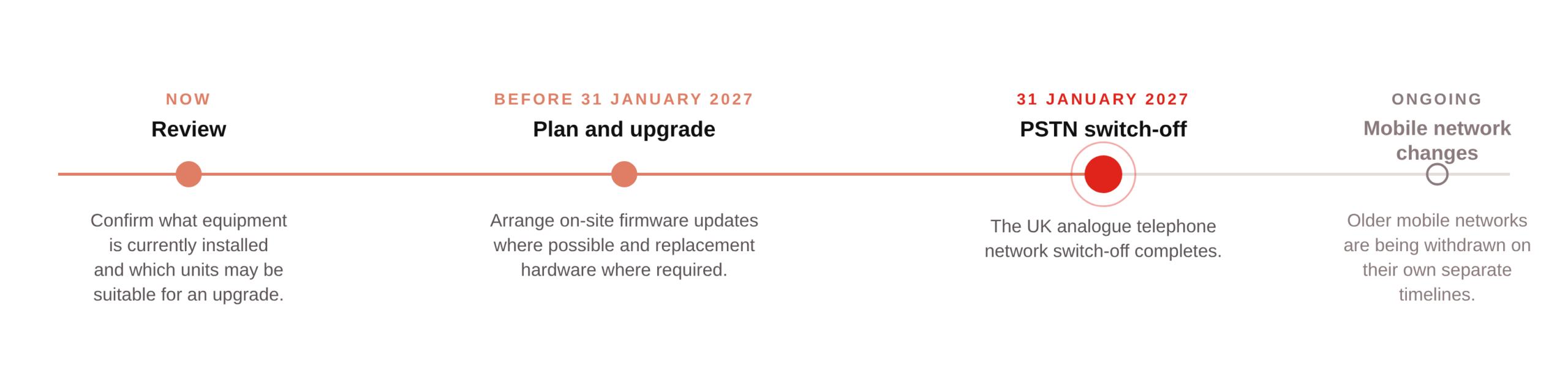
31 January 2027
Changes to older mobile networks are also continuing on separate timelines. Reviewing your lift communication now gives you time to check what is already installed and plan the right route for each site.
The timeline
What needs to happen before the switch-off?
What SL6 + Orion means
Three parts, working together.

01 · The phone
SafeLine SL6
The lift emergency telephone. It makes the emergency voice call directly to your chosen Alarm Receiving Centre over 4G VoLTE.

02 · The connection
4G connectivity
SafeLine SIM provides managed, multi-network connectivity and one point of support across your sites. SafeLine SL6 can also operate with other suitable 4G SIMs.

03 · The digital record
SafeLine Orion
Logs and time-stamps digital alarm identification, EN81-28 test-call results and relevant status information in one view.
The equipment a trapped passenger depends on should never be the last thing on the list.
SafeLine has developed lift communication products since 1995.
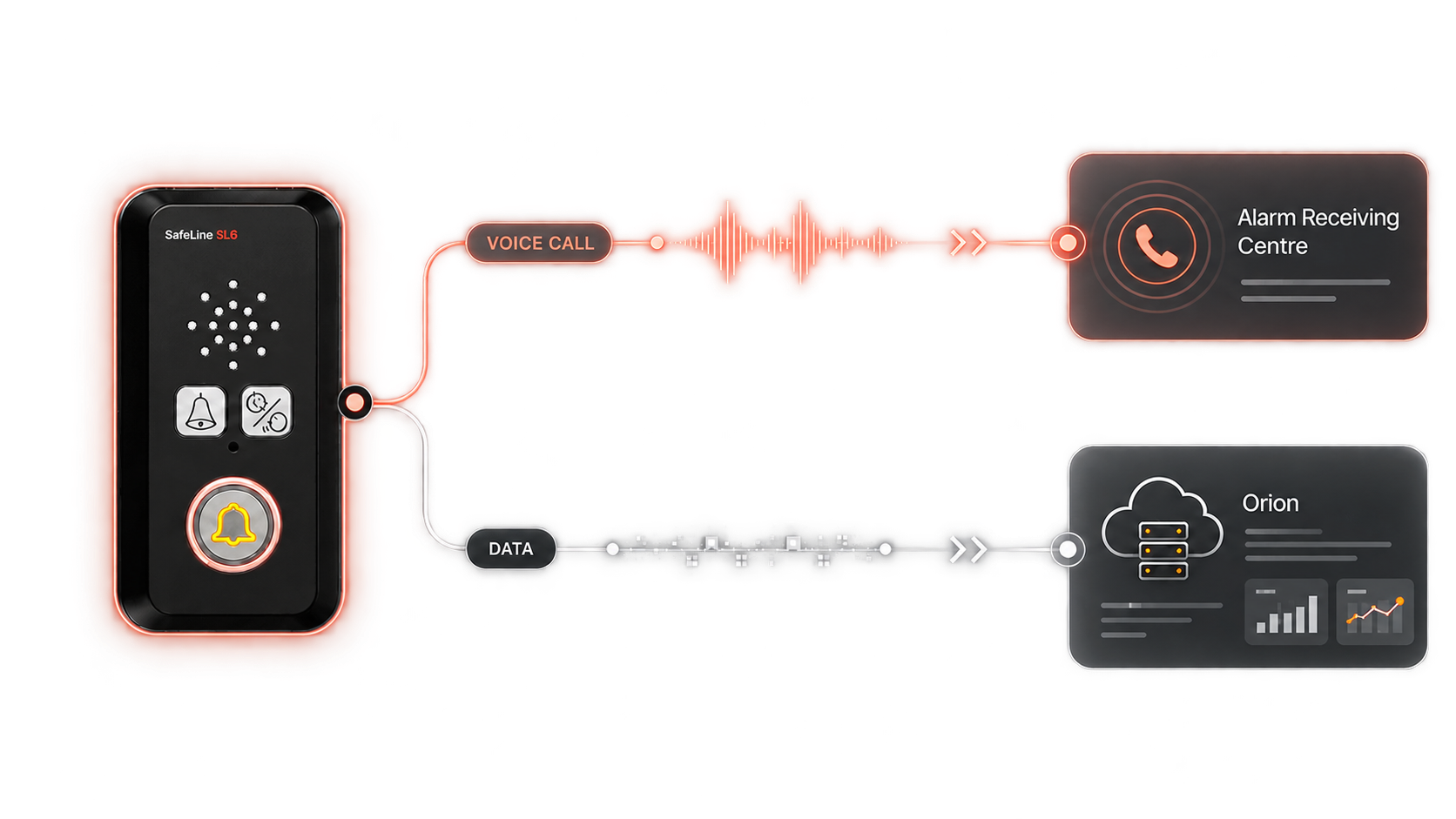
The alarm path
One emergency call. Two separate paths.
The upgrade route
Upgrade where possible. Replace only where needed.
Where an upgrade is possible, the firmware is updated locally at the lift by an engineer. It is not completed remotely through Orion. Where the existing unit cannot be upgraded, replacement hardware may be needed.
Watch the film
See how SafeLine SL6 connects.
What this means for you
Clearer communication. Better visibility.

For lift companies
- A clear upgrade route based on the age and configuration of each SL6
- On-site firmware updates where the existing unit allows
- Emergency-call and EN81-28 test-call activity logged in one view
- Wireless configuration through SafeLine LYNX, with no laptop required
- Lifetime support from SafeLine on the products you install

For property owners and facilities teams
- Emergency-call events and EN81-28 test-call activity logged and time-stamped
- A clearer record of test-call and alarm activity across your buildings
- Visibility of relevant status information from connected SafeLine equipment
- One view across mixed-brand lift portfolios
Your partner in lift safety.
We help you plan the transition around your buildings, budget and access requirements.
Working together
A practical route forward.
01

Discuss
Tell us what lift communication equipment you currently have and what you need to achieve.
02

Plan
We will help you identify a suitable route, with firmware updates where possible and replacement hardware where needed.
03

Connect
The emergency voice call goes to your Alarm Receiving Centre. Digital alarm identification, EN81-28 test-call activity and relevant status information are logged and time-stamped in Orion.

Optional
Add wider lift monitoring with SafeLine LYRA.
SafeLine LYRA adds operational, condition and vibration data from the lift car roof. It is a separate product with its own connection and is not required for SL6 emergency calls or EN81-28 test-call logging in Orion.

Questions
Frequently asked questions.
What happens to a lift emergency telephone when the analogue network is switched off?
A lift emergency telephone that depends on an analogue telephone line will lose that connection when the line is switched off. Moving to a suitable 4G VoLTE connection keeps the emergency voice-call route available. SafeLine Orion can separately log digital alarm identification, EN81-28 test-call information and relevant status information from the connected SafeLine equipment.
Is moving to 4G enough on its own?
Moving to 4G VoLTE keeps the emergency voice-call route working once the analogue line is switched off – but connectivity is only part of the picture. Full EN81-28 compliance also depends on the emergency communication system being correctly installed, configured and maintained, so that alarm calls, periodic test calls and fault signalling keep meeting the standard’s requirements. SafeLine Orion adds a separate digital record of alarm identification and test-call information, giving you clear evidence to support that ongoing compliance – though the underlying EN81-28 obligations always sit with the installed system itself.
Does the emergency call go through Orion?
No. The SafeLine SL6 calls your chosen Alarm Receiving Centre directly over 4G VoLTE. Orion separately receives and logs digital alarm identification, EN81-28 test-call information and relevant status information.
Can we upgrade an existing SafeLine SL6?
Do we have to use a SafeLine SIM?
What happens in the 15-minute consultation?
How do we get started?
Next step
Book your 15-minute consultation.
No-obligation first conversation