Finding the right emergency lift phone PSTN replacement is straightforward, but the window to act is narrowing.
What the PSTN switch off means for lift telephones
The Public Switched Telephone Network (PSTN) is the analogue landline infrastructure that has underpinned lift emergency calls across the UK for decades. BT Openreach has confirmed the full UK PSTN switch off for December 2027 — and decommissioning is already underway in phases across the country.
For lift companies and building owners, this has one immediate consequence: any lift emergency telephone that relies on a PSTN line to make calls will fail. That includes the emergency calls that EN81-28 requires — the calls that connect trapped passengers to an alarm-receiving centre.
When is the PSTN switch off in the UK?
The UK PSTN switch off deadline is December 2027. BT Openreach confirmed this date and the rollout is happening in stages — meaning some areas have already had their PSTN lines decommissioned. If your lifts are in an area that has already switched, your PSTN-dependent emergency telephone may already be unreliable.
| Country | PSTN switch off timeline |
|---|---|
| UK (BT Openreach) | Full withdrawal — December 2027 |
| Germany | All-IP migration ongoing — 2025–2027 |
| Sweden | Telia decommission — largely complete |
| Netherlands | KPN switch off — complete |
What happens to lift telephones after the PSTN switch off?
After the PSTN switch off, any lift telephone that depends on a copper landline will be non-compliant with EN81-28. The standard requires that emergency communication is available at all times — a system that cannot make calls fails that requirement.
The liability sits with the building owner. The responsibility for ensuring a compliant, working emergency telephone sits with the installer. There is no grace period after the PSTN switch off date. The deadline is fixed.
What the replacement looks like
The replacement for a PSTN lift telephone is straightforward: a 4G or 5G-capable emergency telephone with a reliable mobile data connection.
The 4G GSM gateway and auto dialler approach used by older lift installations is replaced by a single integrated unit — there is no need to combine separate hardware modules.
SafeLine SL6 supports 4G and 5G with automatic fallback between connection types — so if one path fails, the call routes via another. There is no dependency on the building's fixed network or telephone infrastructure.
Paired with SafeLine SIM — a managed, multi-network SIM that automatically connects to the strongest available signal — the SL6 operates independently of any building infrastructure. Over 30,000 SafeLine SIMs are active across UK lifts today.
How EN81-28 compliance is handled automatically
EN 81-28 sets out the full technical requirements for lift emergency communication – including who is responsible, what backup power is needed, and how quickly a response centre must answer. For a detailed breakdown, see our EN 81-28 compliance guide. In terms of the PSTN switch-off, what matters most is the 72-hour test call requirement: with SafeLine SIM, those test calls are automated and logged via SafeLine Orion – the cloud monitoring platform – at no additional charge. With SafeLine SIM, those test calls are automated and logged via SafeLine Orion — the cloud monitoring platform — at no additional charge.
No manual testing. No missed calls. A time-stamped compliance record available on demand.
How long does the transition take?
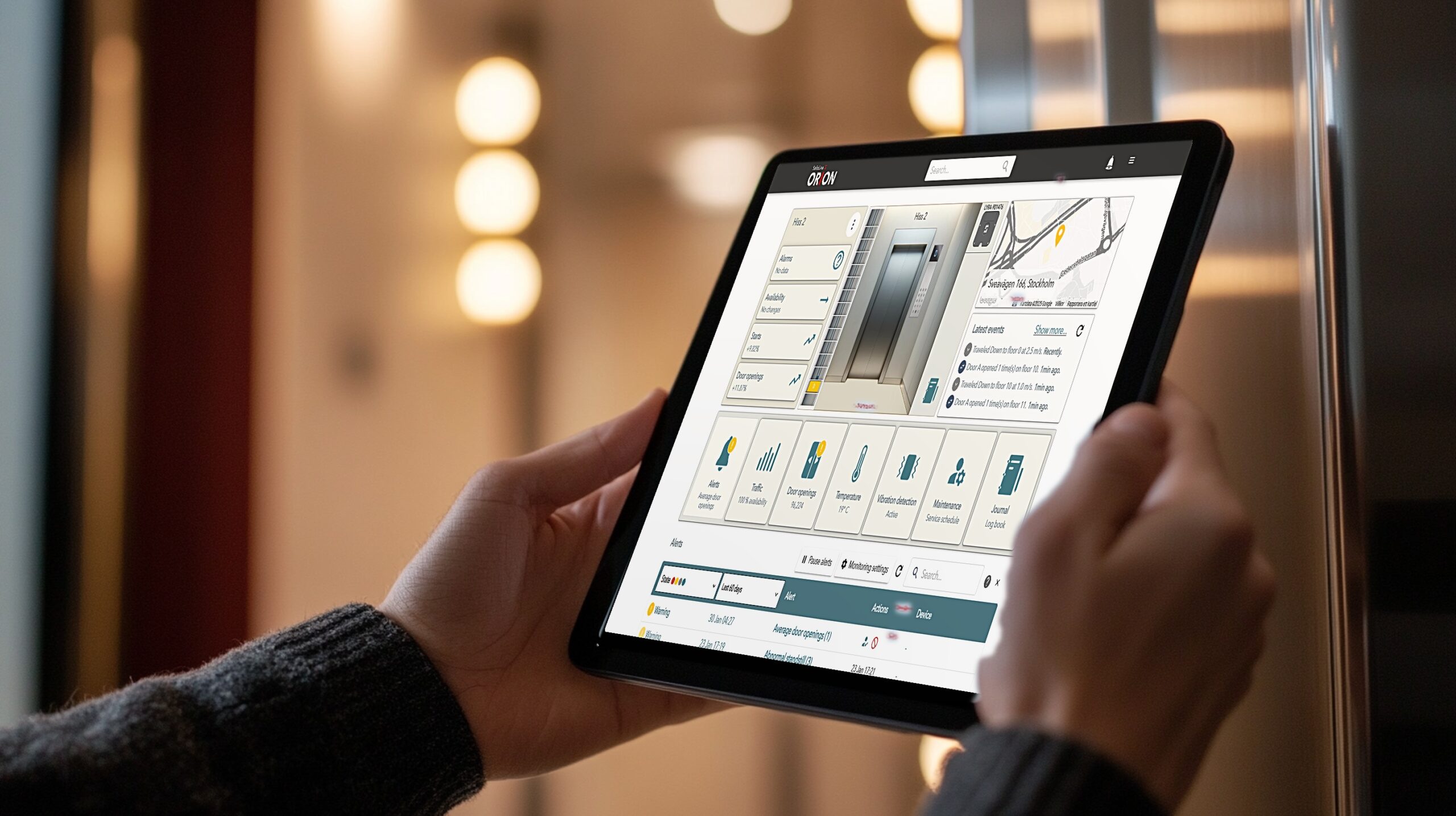
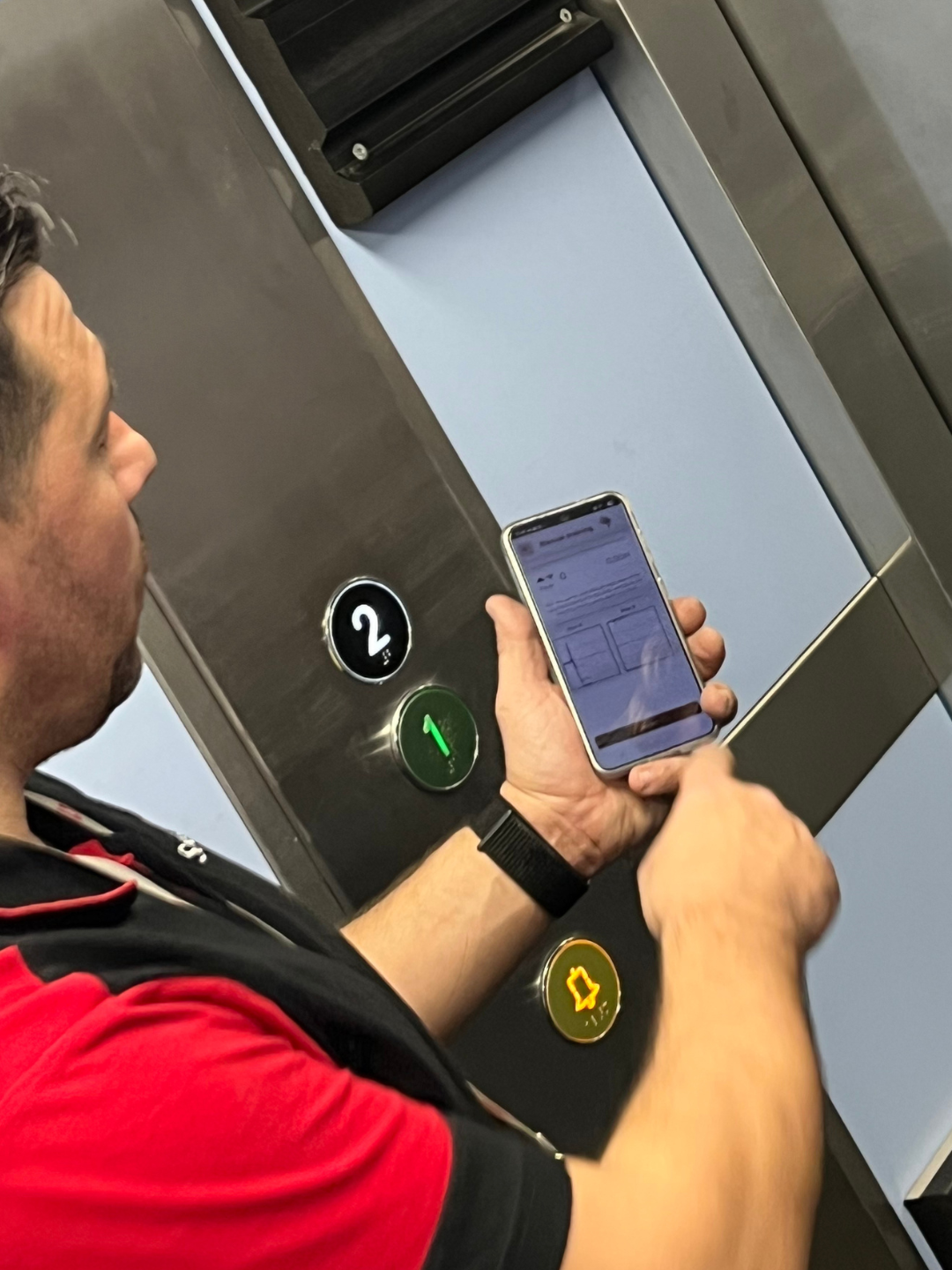
For an experienced engineer, replacing a PSTN lift telephone with SafeLine SL6 is a single-visit job. Configuration is done wirelessly via the SafeLine LYNX II mobile app — no laptop, no specialist software on site. The SIM is plug-and-play, activated and managed remotely by SafeLine's dedicated SIM team.
How to check if your lift telephone uses PSTN
If you are not certain whether your emergency telephone is connected to a copper landline, there are a few straightforward ways to check.
The most reliable method is to look at how the telephone cable exits the lift car or machine room. A copper pair (two thin wires, usually grey or white) running to a BT master socket or internal exchange indicates a PSTN connection. If the telephone connects to a router or has a SIM card tray, it is likely already on a digital connection.
You can also ask your current maintenance contractor to confirm the connection type. Any maintenance log or installation record should indicate whether the emergency telephone relies on a landline circuit. If no records are available, your lift service provider can test the line during the next visit.
If you manage a large portfolio of lifts across multiple buildings, the most efficient approach is a site audit – going through each installation and documenting the connection type. This gives you a clear picture of scope before you begin the migration.
4G or 5G: choosing the right connection for your lift
After the PSTN switch-off, lift emergency telephones connect over the mobile network rather than a fixed line. The main choice is between 4G and 5G, and how that connection is managed.
4G or 5G cellular is the most resilient option for most UK lift installations. The telephone connects directly to the mobile network via a SIM card, with no dependency on the building's broadband or telephone infrastructure. If the building's internet goes down, the emergency telephone is unaffected. Multi-network SIM cards – which automatically switch between available networks – provide additional resilience in areas with variable signal strength.
For most UK lift operators, a 4G cellular connection via a managed SIM is the simplest and most reliable path. It requires no changes to building infrastructure, no router configuration, and no dependency on a third-party broadband provider.
Act before the PSTN switch off deadline
The UK PSTN switch off is not provisional — the December 2027 deadline is confirmed, and the rollout is already underway. Lead times for replacements are increasing as the deadline approaches. Existing PSTN systems in switched areas may already be unreliable.
There is no benefit to waiting.
Download the guide
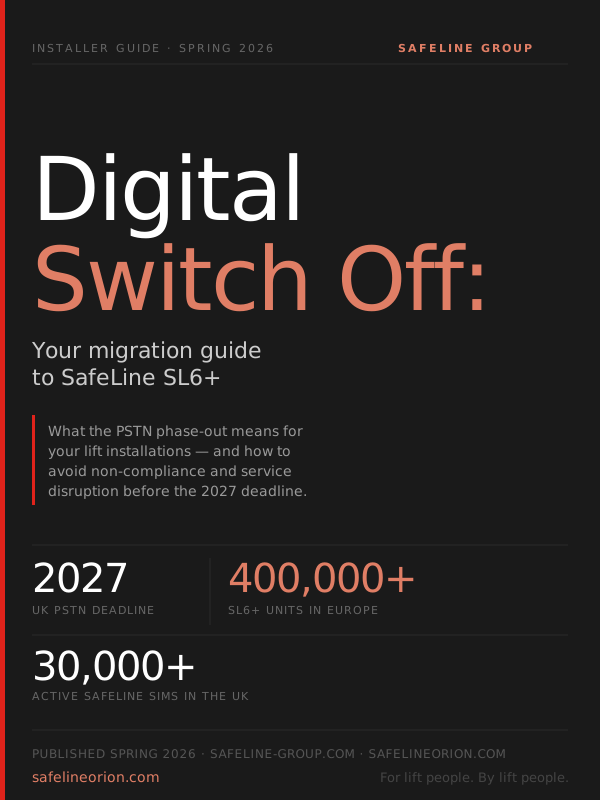
PSTN Switch Off: Your migration guide for UK lift companies
What’s inside:
→ Key dates for UK, Germany, Sweden & Netherlands
→ Why simple adapters fall short
→ SafeLine SL6+ overview and specs
→ 6-step migration checklist
→ EN81-28 compliance requirements
→ FAQ from installers
Frequently asked questions
A 4G or 5G-capable emergency telephone. SafeLine SL6 supports both connection types with automatic fallback, paired with SafeLine SIM for infrastructure-independent connectivity.
After the PSTN switch off, all copper landline-based telephone services stop working. Lift emergency telephones dependent on PSTN lines become non-functional and non-compliant with EN81-28. Building owners carry the liability for non-compliant lifts.
SafeLine SL6 is designed specifically for lift emergency communication. It supports 4G and 5G, works with SafeLine SIM for multi-network coverage, and is configured wirelessly via the LYNX II app.
BT Openreach has confirmed the UK PSTN switch off deadline of December 2027. The rollout is phased — some areas have already been switched, meaning PSTN-dependent lift telephones in those areas are already at risk.
Yes. EN 81-28 requires a two-way voice connection available at all times, including an automatic test call at least every 72 hours. After the PSTN switch-off, any system that relies on a copper landline fails this requirement. SafeLine SIM automates test calls via SafeLine Orion at no additional cost – every test is logged and time-stamped. For the full EN 81-28 requirements, see our compliance guide.
For an experienced engineer, replacing a PSTN telephone with SafeLine SL6 is a single-visit job. Configuration is wireless via the LYNX II app, and the SIM is plug-and-play — activated and managed remotely.
What is a 4G GSM gateway for lift emergency phones, and is it still needed?
A 4G GSM gateway is a separate device that converts a fixed-line lift emergency phone signal to a 4G mobile connection — typically used to extend the life of older PSTN-only equipment. SafeLine SL6 makes the gateway redundant: it connects directly over 4G or 5G without an intermediate adapter, paired with SafeLine SIM for the network connection. One unit, no extra hardware.
Do I need an emergency lift phone PSTN replacement if I have a GSM unit?
A GSM emergency lift phone may continue working in the short term — but only if it operates over a 4G/LTE network. Older 2G GSM equipment is on a separate phase-out timeline run by mobile operators. If you are uncertain whether your current unit is 4G-capable, send the model and serial number to your local SafeLine office for a per-unit assessment. For a compliant emergency lift phone PSTN replacement, SafeLine SL6 is the recommended upgrade.