This article explains the difference between preventive and predictive maintenance for lifts, where each approach works, and what it takes to move from one to the other.
What is preventive lift maintenance?
Preventive maintenance is time-based. A lift receives a service visit at fixed intervals – typically every one, three, or six months – regardless of how many journeys it has made, how heavily it has been used, or whether any components are showing signs of wear.
The logic is straightforward: regular servicing keeps components clean, lubricated, and adjusted, and catches obvious issues before they become failures. For lifts, this typically includes checking door operation, testing safety devices, lubricating guide rails and ropes, and verifying emergency telephone function.
Preventive maintenance contracts are the standard model across the UK lift industry. They are easy to plan, schedule, and price. The limitation is that the visit interval is not connected to the actual condition of the lift. A lift used 50 times a day in a busy office block gets the same quarterly visit as a lift used five times a day in a low-occupancy residential building.
What is predictive lift maintenance?
Predictive maintenance is condition-based. Instead of a calendar triggering the service visit, data from the lift itself determines when maintenance is needed. Sensors monitor motor current draw, door operation times, vibration, temperature, and other indicators of mechanical health. When a reading moves outside its normal range – before a component actually fails – the system raises an alert.
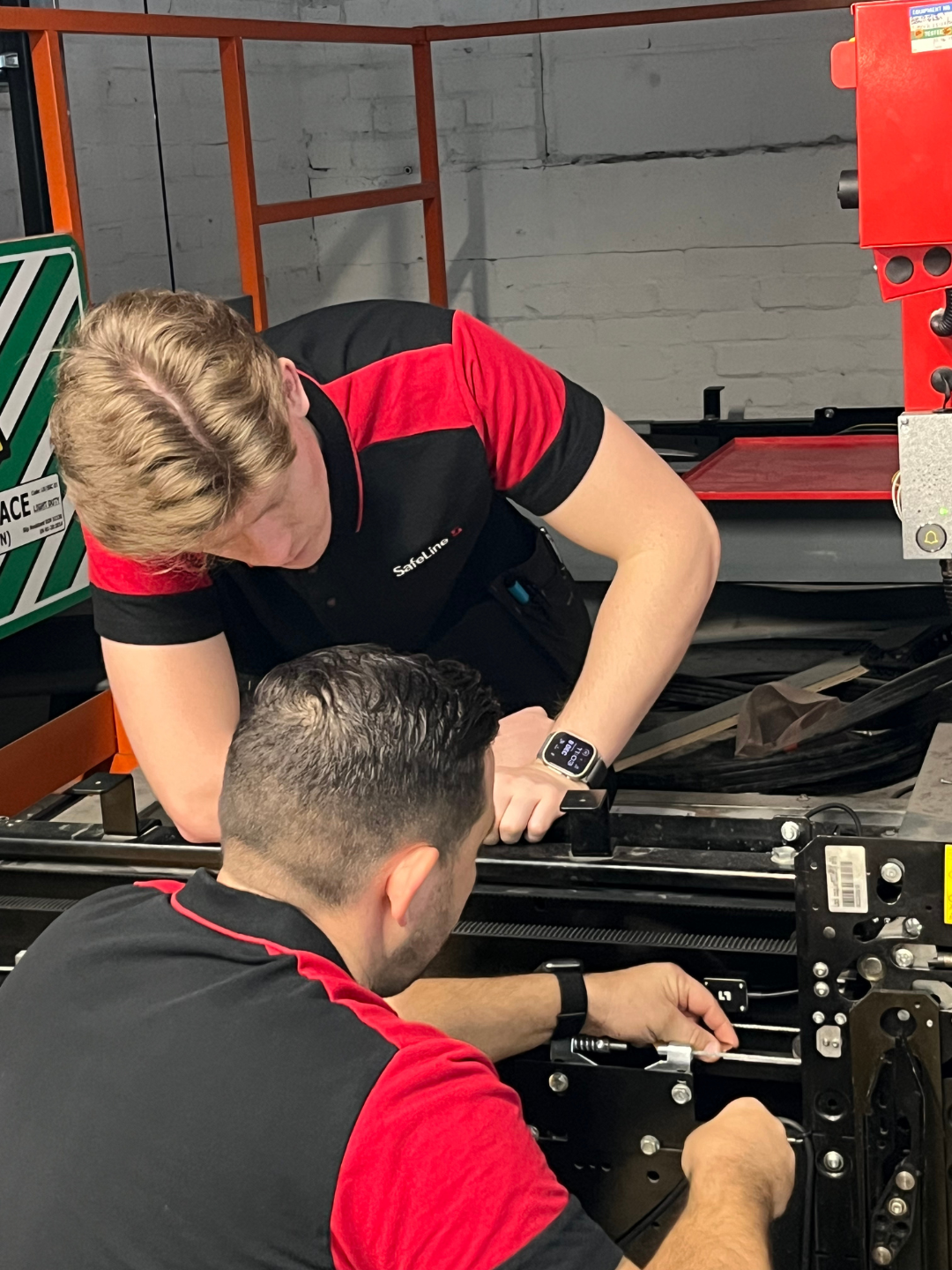
The maintenance visit happens in response to evidence, not a schedule. The engineer arrives knowing what the fault indicator is and what to inspect. For a detailed look at how this works in practice, see our guide to real-time lift monitoring and predictive maintenance.
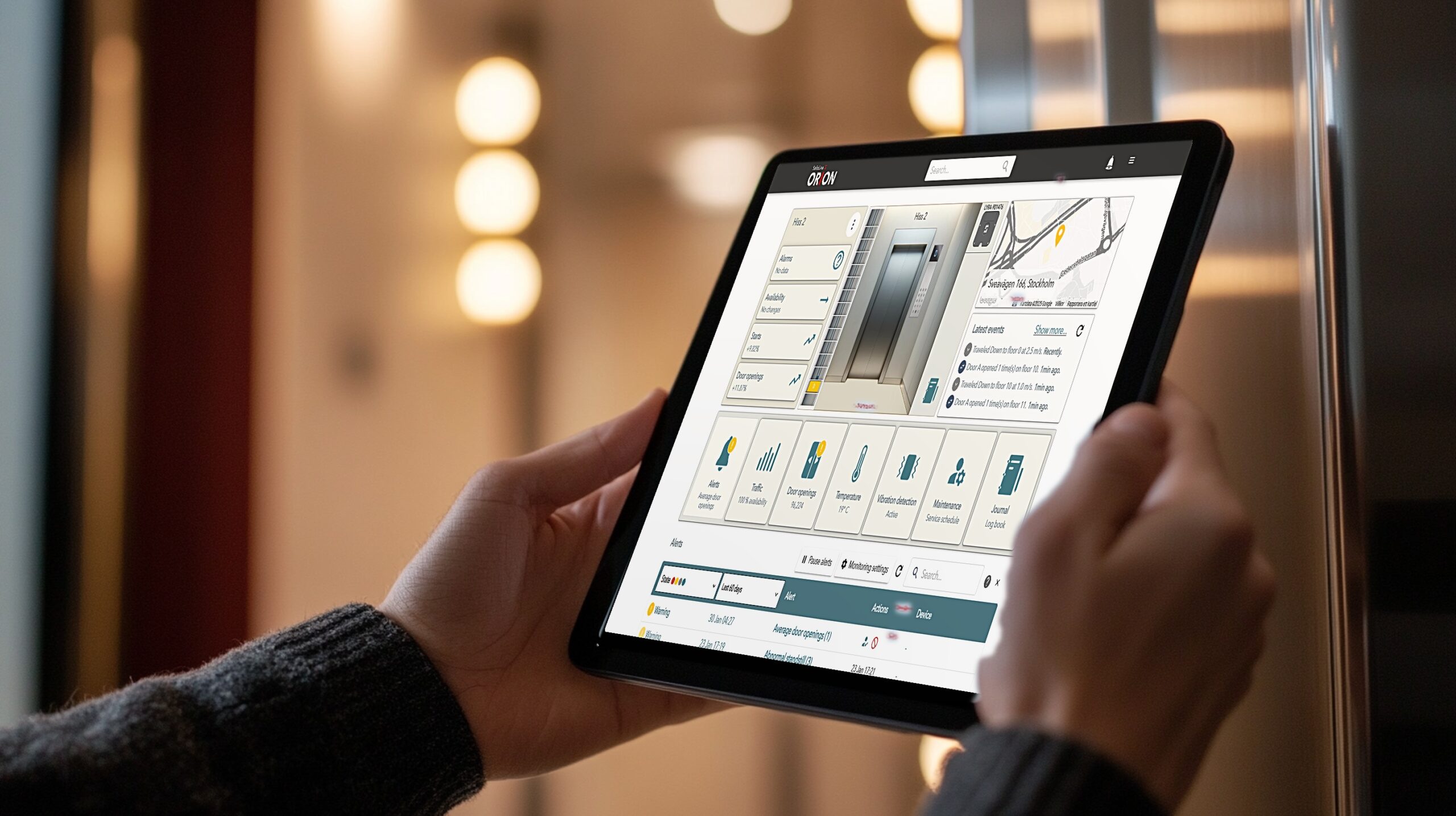
Predictive maintenance requires two things that preventive maintenance does not: continuous data from the lift, and a platform to interpret that data and translate it into actionable alerts. This is where SafeLine Orion becomes central to the maintenance model – providing a single dashboard across any brand, any age of lift.
Predictive vs preventive: a direct comparison
| Preventive | Predictive | |
|---|---|---|
| Trigger | Time interval (calendar) | Condition data (live monitoring) |
| Visit frequency | Fixed – same for all lifts | Variable – based on actual need |
| Fault detection | At point of visit | Continuous – before failure |
| Downtime risk | Faults develop between visits | Alerts flag issues early |
| Engineer efficiency | Visits regardless of lift condition | Targeted visits with known fault context |
| Setup requirement | Maintenance contract | Monitoring hardware + platform |
A third category – reactive maintenance – sits at the other end of the spectrum: no planned intervention, just a response when something fails. Reactive maintenance is the most expensive model in the long run because unplanned failures carry higher repair costs, longer downtime, and potential LOLER compliance implications.
The real cost of time-based maintenance schedules
A quarterly maintenance schedule on a portfolio of 20 lifts means 80 planned visits per year. If 30 per cent of those visits find nothing actionable – because the lifts are in good condition and the interval is too conservative – that is roughly 24 engineer visits generating no useful output. Multiply the cost of an engineer visit across a large estate and the inefficiency becomes significant.
The hidden cost works in the other direction too. A heavily used lift on a six-month service interval may develop a fault between visits. If that fault causes a failure, the unplanned callout, repair time, and downtime cost typically exceeds the cost of several scheduled visits.
Predictive maintenance addresses both inefficiencies. Lightly used lifts that are performing well require fewer visits. Heavily used lifts showing early signs of wear get attention before a failure occurs. The maintenance resource goes where it is actually needed.
When predictive maintenance makes sense
Predictive maintenance delivers the most value in environments where lift availability is critical and usage varies across the portfolio.
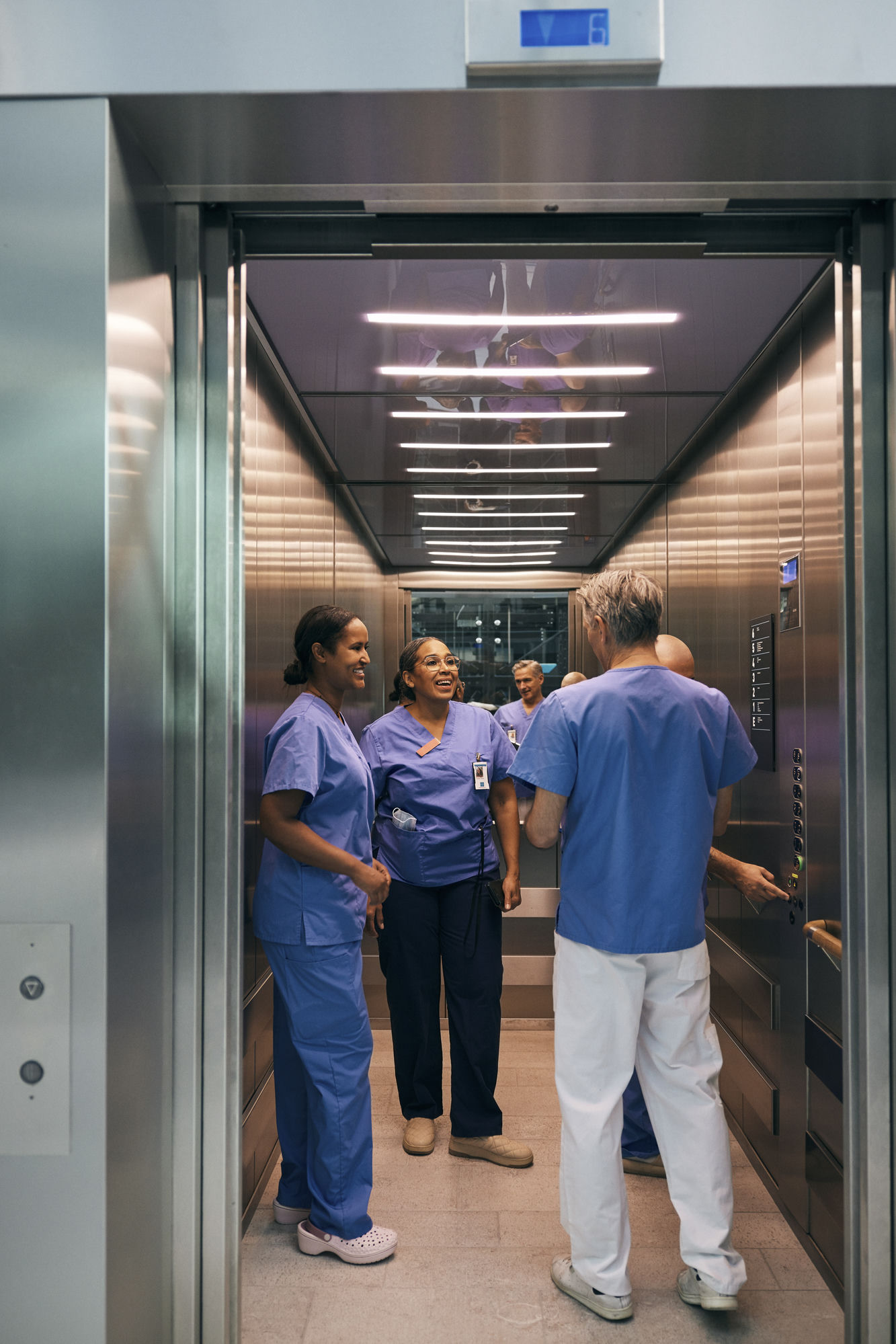
Hospitals and healthcare facilities operate lifts that directly affect patient flow and clinical logistics. A lift failure in a hospital environment is an operational event, not an inconvenience. Predictive monitoring means faults are identified and addressed before they cause a stoppage.
Large residential estates and housing associations typically manage significant portfolios across multiple sites. Preventive schedules are administratively manageable but do not reflect the reality that a lift in a 20-storey block with 200 residents has fundamentally different maintenance needs from a lift in a six-floor building with 30 residents.
Commercial property managers overseeing mixed-use portfolios benefit from centralised visibility – knowing which lifts are performing within normal parameters and which are showing anomalies, without relying on tenant reports or scheduled visits to surface issues.
Predictive maintenance is less compelling where usage is very low, the portfolio is small, and the investment in monitoring infrastructure is difficult to justify. For a single low-use lift in a small building, a well-structured preventive contract is the more practical choice.
How monitoring technology makes predictive maintenance practical
The barrier to predictive maintenance has historically been data collection. Without a continuous feed of operational data from the lift, there is nothing to analyse and no basis for condition-based decisions.
Connected lift monitoring systems change this. A monitoring unit captures operational data continuously – door cycle counts, motor parameters, trip completion rates, fault codes – and transmits it to a cloud platform where it is analysed against baseline behaviour. When readings deviate from normal patterns, the platform raises an alert to the maintenance team.
This gives lift companies and building owners two capabilities that preventive schedules cannot provide: advance warning of developing faults, and a continuous record of lift performance that supports LOLER compliance documentation and service reporting.
The transition from preventive to predictive does not require replacing the lift. Monitoring units can be added to existing installations, independent of the manufacturer or age of the equipment. For mixed portfolios – multiple brands, multiple sites – a single platform provides visibility across the entire estate from one interface.
Frequently asked questions
Can predictive maintenance replace preventive maintenance entirely?
In most cases, predictive monitoring complements rather than replaces preventive maintenance. Regulatory requirements, manufacturer recommendations, and LOLER inspection schedules still apply. What changes is the frequency and focus of maintenance visits – data-informed visits replace fixed-interval visits for routine servicing, while mandatory inspections remain on schedule.
What data does predictive lift maintenance use?
The most useful indicators are motor current draw (a leading indicator of mechanical stress), door operation timing (wear on door gear), trip completion rates (how often the lift completes a journey without fault), and vibration or temperature readings where sensors are fitted. Monitoring platforms analyse combinations of these against the lift's own baseline behaviour, rather than a fixed threshold.
Does predictive maintenance satisfy LOLER requirements?
LOLER requires that lifts are thoroughly examined at defined intervals by a competent person. Predictive monitoring does not replace this. It supplements it by providing continuous performance data that can inform the thorough examination and identify faults between examinations before they escalate.
Is predictive maintenance suitable for older lifts?
Yes. Monitoring units are fitted externally and connect to existing wiring without requiring replacement of the controller or drive system. Lifts of any age and from any manufacturer can be monitored, provided there is a suitable connection point for the monitoring hardware.