The phone must test itself at least every three days, keep working for at least one hour during a power cut, and tell the rescue centre exactly which lift is calling. EN 81-28 defines visual and audible signals, and EN 81-70 adds accessibility requirements, so every passenger knows help is on the way, including people who cannot hear, speak or see.
The rules at a glance
| Requirement | What it means in practice | Source |
|---|---|---|
| Two-way voice communication | A passenger presses a clearly marked alarm button and can speak to a person | EN 81-28 |
| Rescue service availability | The rescue service must be available whenever the lift is in use. For lifts in use 24 hours a day, that means a 24/7 service. | Lifts Regulations 2016, EN 81-28 |
| Lift identification | The rescue centre sees which building and which lift is calling | EN 81-28 |
| Backup power | At least 1 hour of operation after mains failure, including 15 minutes of voice communication | EN 81-28 |
| Automatic test call | At least every 3 days, to confirm the line to the rescue centre works | EN 81-28 |
| Visual and audible signals | A yellow pictogram lights once the alarm is confirmed and stays on until the alarm is closed, and a green pictogram when voice communication is established; an audible signal sounds while the alarm connects | EN 81-28, EN 81-70 |
| Accessible alarm button | Reachable, clearly marked, usable without prior knowledge | EN 81-70, Equality Act 2010 |
| Thorough examination | Passenger lifts examined by a competent person at least every 6 months, or in line with a written examination scheme | LOLER 1998 |
| Responsibility | Usually the building owner or the person in control of the lift, such as a managing agent | HSWA 1974, LOLER 1998 |
What is EN 81-28?
EN 81-28 is the European standard for remote alarm systems on passenger and goods passenger lifts. It is published by the European Committee for Standardisation (CEN) and belongs to the EN 81 family of lift safety standards. The current edition is EN 81-28:2022, published in the UK as BS EN 81-28:2022. The technical content is the same as the European version.
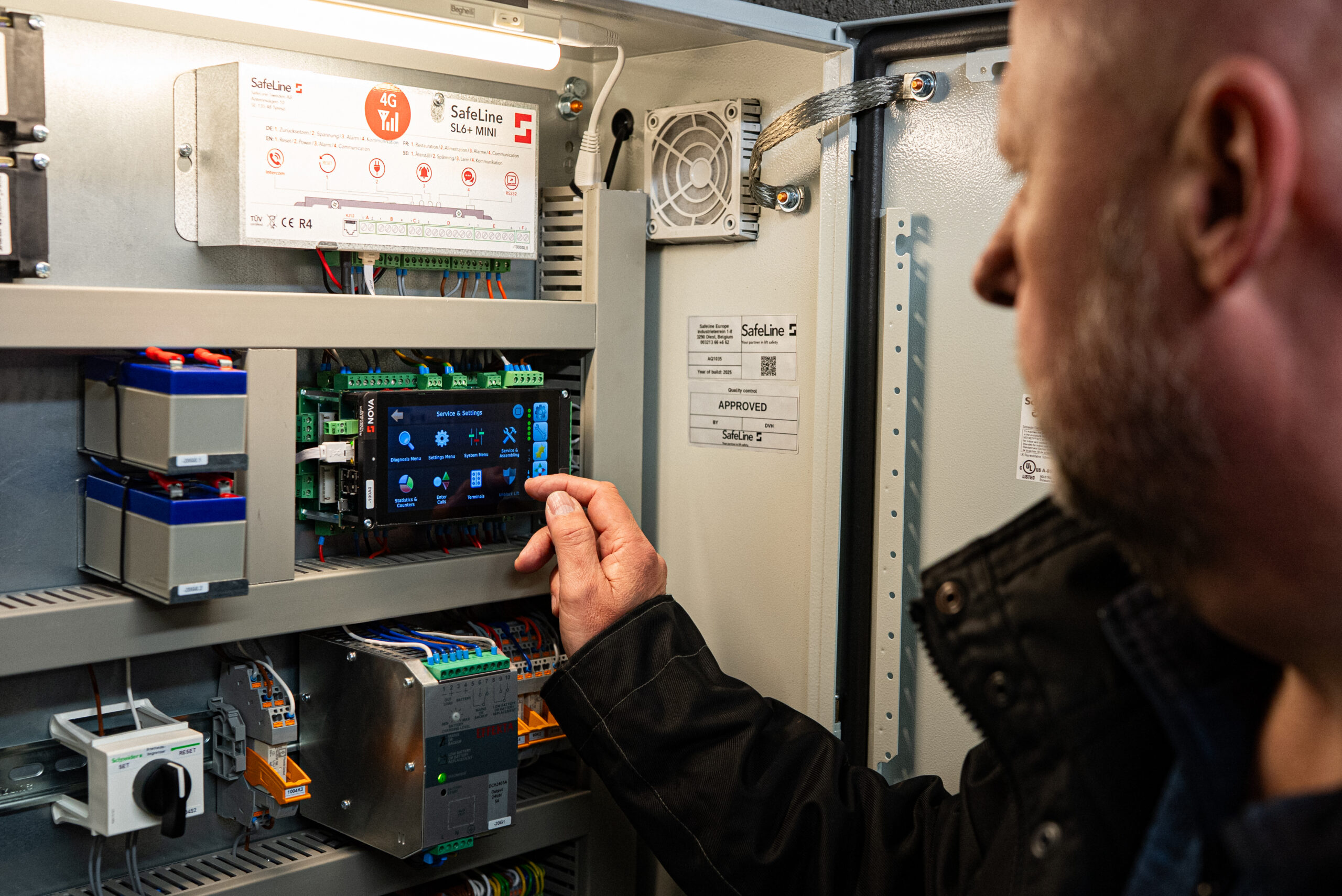
Many UK lift engineers call the lift emergency phone an autodialler. It is the same system, and the same rules apply. The autodialler unit is often fitted in the motor room or at the top of the shaft. In the lift car, the passenger uses the alarm button, speaker and microphone to talk to the rescue centre.
EN 81-28 applies to new lifts. For existing lifts, it is the usual reference when the alarm system is upgraded or the lift is modernised.
What EN 81-28 requires
Two-way voice communication
A trapped passenger must be able to talk to the rescue service from inside the lift car. A clearly marked alarm button starts the alarm, and no prior knowledge is needed to use it. An installation can have more than one alarm button.
A rescue service available whenever the lift is in use
The alarm must reach a rescue service. The rescue service must be available whenever the lift is in use. For lifts in use 24 hours a day, that means a 24/7 service. The rescue centre acknowledges the alarm to the passenger, and a rescue is organised as quickly as possible.
Lift identification
When an alarm comes in, the rescue centre must be able to identify the lift automatically: the building, the address and the specific lift. This matters most in buildings with several lifts and in large estates.
Backup power
The alarm system must keep working when the mains supply fails. EN 81-28 requires at least one hour of operation, including 15 minutes of voice communication. The system warns when the battery can no longer cover this.
Automatic test calls
The system must send an automatic test call at least every three days. The SL6 test call interval is configurable at installation; set it to three days or less to meet EN 81-28. The test confirms that the line from the lift to the rescue centre works. If a test fails, the system must show it, so the fault can be fixed before a passenger needs the phone.
Signals passengers can see and hear
Every passenger must know that help is on the way, including people who cannot hear, speak or see. EN 81-28 and EN 81-70 require:
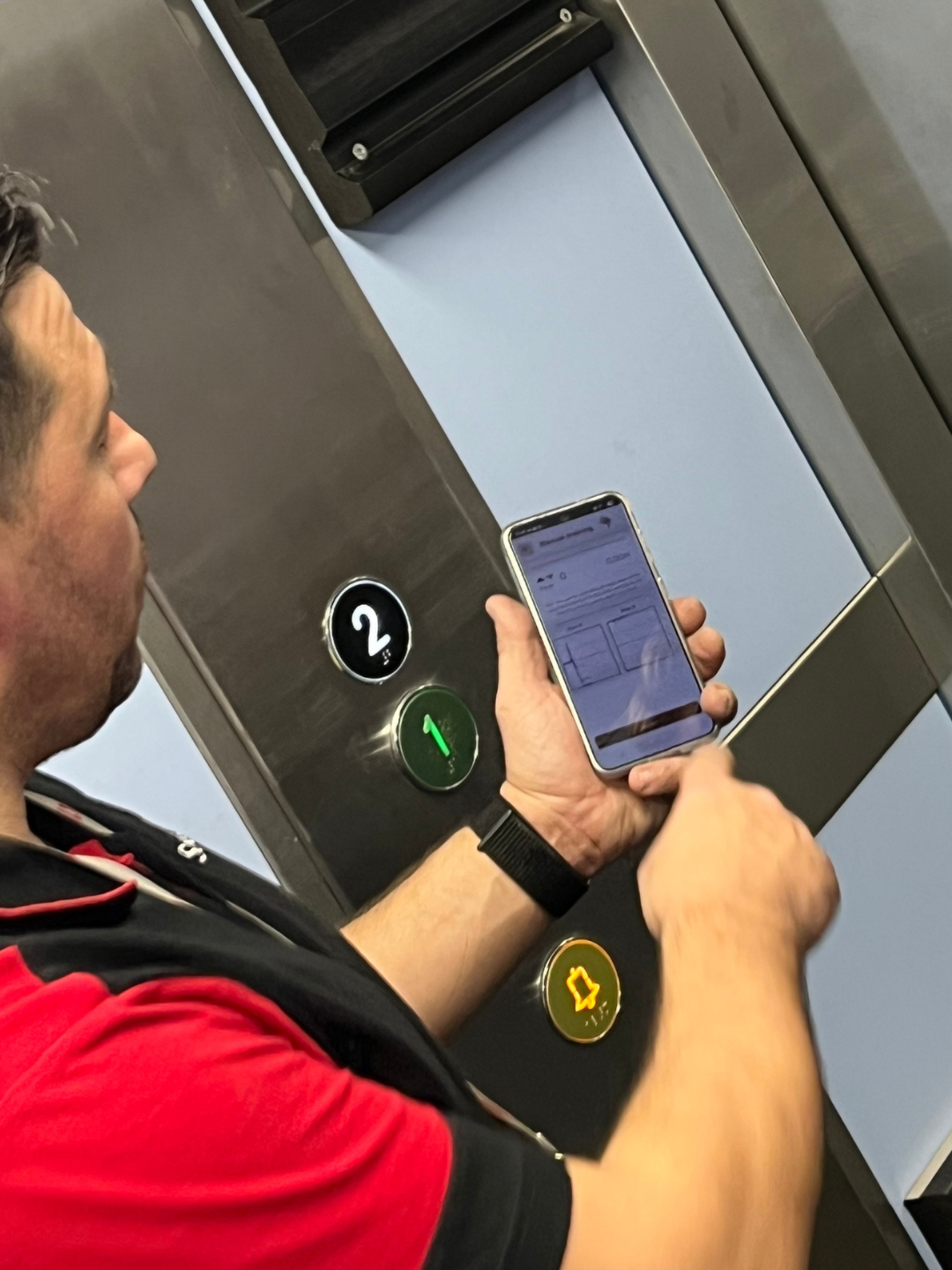
- a yellow pictogram that lights once the alarm is confirmed and stays on until the alarm is closed
- a green pictogram that lights when voice communication with the rescue centre is established
- an audible signal in the car while the alarm is being connected
The illuminated signals support passengers who cannot hear or speak. The audible signal supports passengers who cannot see.
Alarm filtering
To avoid false alarms, the system can filter an alarm when the lift is at a floor with the doors open, or while the car is running. If the passenger keeps pressing the alarm button, the filter is bypassed after no more than 30 seconds.
Accessibility: EN 81-70 and the Equality Act 2010
EN 81-70 sets the accessibility rules for lifts, including for passengers with disabilities. For the emergency phone this covers where the alarm button sits, how it is marked, and the visual and audible feedback after it is pressed.
The Equality Act 2010 requires service providers to make reasonable adjustments for disabled people. In practice, this usually means:
- visual signals alongside audio
- an induction loop where hearing loop provision is required
- clear, high-contrast marking on the alarm button
For public buildings – hospitals and NHS estates, transport hubs, retail and council offices – these adjustments help meet the Equality Act duty to make reasonable adjustments. EN 81-70 sets the technical requirements.
Refuge areas need their own emergency voice communication system. It is separate from the lift emergency phone and follows the code of practice BS 5839-9:2021.
Older lifts: EN 81-80 and LOLER
EN 81-28 applies to new lifts. For existing lifts, it is the usual reference when the alarm system is upgraded or the lift is modernised. Older lifts are covered by two other routes:
- EN 81-80 is the standard for improving the safety of existing lifts. It lists a reliable two-way remote alarm as one of the improvements a risk assessment should consider.
- LOLER 1998 requires every lift used to lift people to be kept safe and to have a thorough examination by a competent person at least every six months, or in line with a written examination scheme. A lift emergency phone that does not work is a safety defect the examiner will report.
In practice, every lift in service is expected to have a working emergency phone that reaches a rescue service, whatever its age. The Health and Safety Executive sets out the duties for passenger lifts and escalators.
Who is responsible for the lift emergency phone?
Responsibility usually sits with the building owner or the person in control of the lift, such as a managing agent. The lift maintenance company installs and services the phone, but the legal duty stays with the owner or the person in control.
The duty comes from:
- the Health and Safety at Work Act 1974
- the Lifting Operations and Lifting Equipment Regulations (LOLER) 1998
- for residential blocks, the landlord’s repairing obligations for communal areas
Building owners and managing agents should:
- make sure the maintenance contract covers EN 81-28 explicitly
- keep records of test calls and alarms
- act on any finding from the LOLER thorough examination
The PSTN switch-off and lift emergency phones
Many UK lift phones still use an analogue PSTN line. BT Group will retire the UK PSTN network by 31 January 2027. Lift phones on analogue PSTN lines need a new connection before that date to keep meeting EN 81-28.
A 4G emergency phone does not depend on the analogue PSTN network or on the building’s broadband, subject to adequate mobile coverage at the site. Our PSTN switch-off guide for lift phones explains the steps.
How to keep evidence of compliance
EN 81-28 compliance is ongoing. The three-day test calls create a record that the system works, if the records are kept.
SafeLine covers this with three parts that work together:
- SafeLine SIM provides the connection.
- SL6 places the emergency call and sends the EN 81-28 test call.
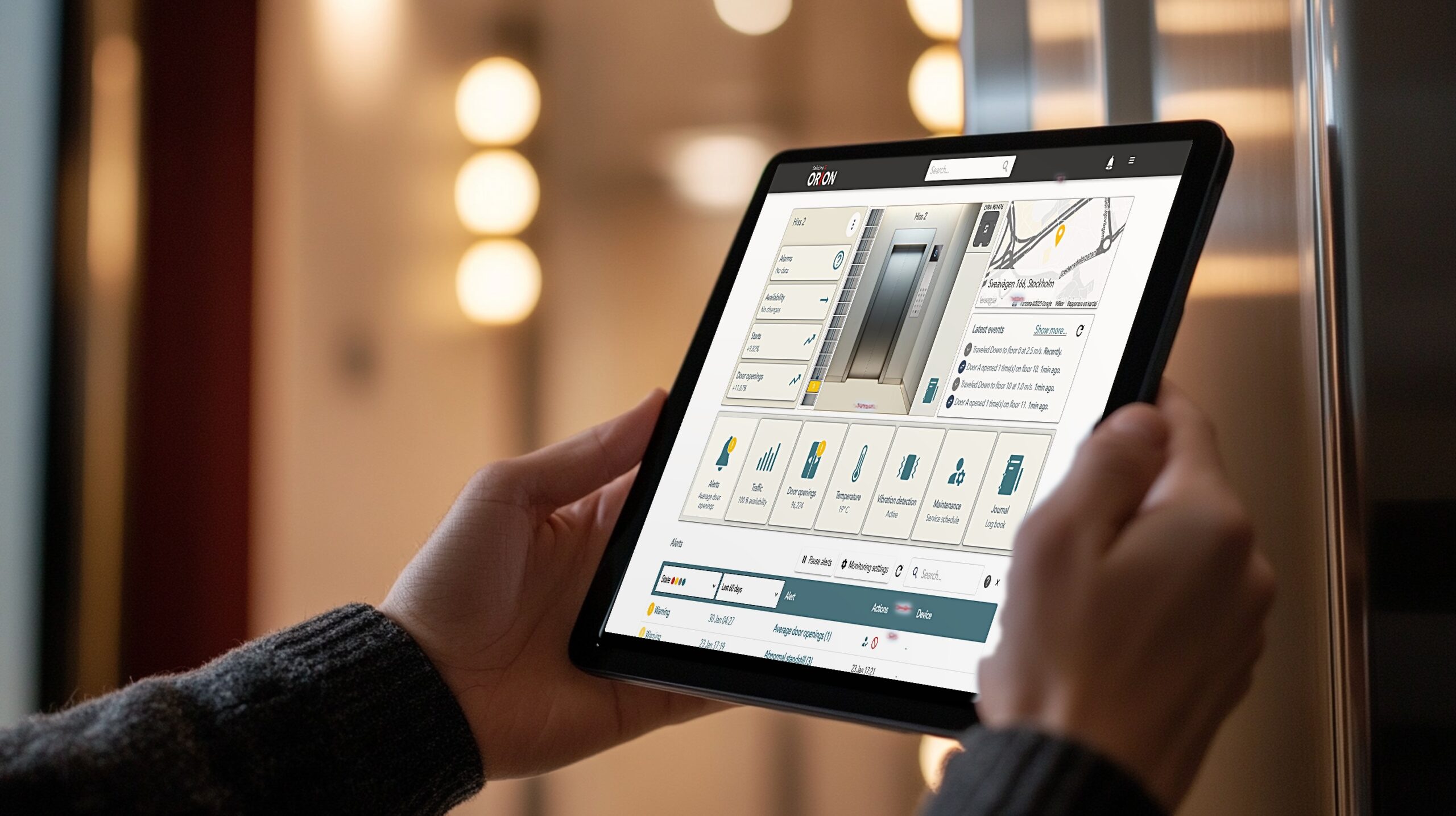
- SafeLine Orion logs and timestamps every alarm and test call, and shows the status of every lift in one view.
Together they give an audit trail you can show at the LOLER thorough examination. See how lift monitoring works.
Checklist for building owners
- Every lift has a two-way emergency phone connected to a rescue service that is available whenever the lift is in use.
- The rescue centre can identify each lift automatically.
- Test calls go out at least every three days, and failed tests are followed up.
- Backup power lasts at least one hour, including 15 minutes of voice.
- Visual and audible signals work, and every alarm button is clearly marked.
- No lift phone depends on an analogue PSTN line after 31 January 2027.
- Records of alarms and test calls are kept and available for the LOLER examination.
Frequently asked questions
What are the regulations for lift emergency phones in the UK?
The Lifts Regulations 2016 require a two-way communication system that allows permanent contact with a rescue service. EN 81-28, adopted in the UK as BS EN 81-28, is the designated standard used to show compliance. The phone must connect a trapped passenger to a rescue service, test itself at least every three days and work for at least one hour in a power cut. The rescue service must be available whenever the lift is in use. For lifts in use 24 hours a day, that means a 24/7 service. Responsibility usually sits with the building owner or the person in control of the lift, such as a managing agent. The duties come from the Health and Safety at Work Act 1974 and LOLER 1998.
Is a lift emergency phone a legal requirement in the UK?
Yes, for lifts placed on the market under the Lifts Regulations. Every such lift needs a working means of calling for help, and EN 81-28 is the designated standard used to show compliance. Older lifts are expected to have one in practice. Responsibility usually sits with the building owner or the person in control of the lift, such as a managing agent. The duty to keep it working comes from LOLER 1998 and the Health and Safety at Work Act 1974.
Who is responsible for the lift emergency phone?
Responsibility usually sits with the building owner or the person in control of the lift, such as a managing agent. The maintenance company services the phone, but the legal duty stays with the owner or the person in control.
How often must a lift emergency phone be tested?
EN 81-28 requires an automatic test call at least every three days. Under LOLER, the lift is also examined by a competent person at least every six months, or in line with a written examination scheme.
How long must a lift emergency phone work during a power cut?
At least one hour, including 15 minutes of voice communication.
Does EN 81-28 apply to older lifts?
EN 81-28 applies to new lifts. For existing lifts, it is the usual reference when the alarm system is upgraded or the lift is modernised. For older lifts, EN 81-80 recommends a reliable two-way alarm as part of a safety review, and LOLER requires every lift in service to be kept safe. In practice, every lift in service is expected to have a working emergency phone.
What is EN 81-70?
EN 81-70 is the European standard for lift accessibility, including for people with disabilities. For the emergency phone, it adds accessibility requirements to the alarm button and the signals defined in EN 81-28.
Is BS EN 81-28 the same as EN 81-28?
Yes. BS EN 81-28 is the UK publication of EN 81-28. The technical content is identical.
What happens to lift emergency phones when the PSTN is switched off?
BT Group will retire the UK PSTN network by 31 January 2027. Lift phones on analogue PSTN lines need a new connection, such as 4G, before that date to keep meeting EN 81-28.
Does EN 81-28 require a specific technology?
No. EN 81-28 sets functional requirements, not a technology. A landline or cellular system can meet the standard if it delivers two-way voice, a rescue service available whenever the lift is in use, lift identification, backup power and test calls at least every three days.
What are the regulations for lift autodiallers?
A lift autodialler is the UK term for the lift emergency phone. The same rules apply. The Lifts Regulations 2016 require a two-way communication system that allows permanent contact with a rescue service. EN 81-28 is the designated standard used to show compliance. Under LOLER 1998 and the Health and Safety at Work Act 1974, responsibility for keeping it working usually sits with the building owner or the person in control of the lift, such as a managing agent.
Do mobile phones work in lifts?
Not reliably. The lift car is a metal box, and many lifts run in concrete shafts with weak signal. A passenger’s own mobile phone is also no substitute for the lift emergency phone: it cannot identify the lift, does not test itself and may not be with the passenger.
What are the current lift regulations in the UK?
New lifts are placed on the market under the Lifts Regulations 2016, which replaced the Lifts Regulations 1997. Lifts in use are covered by LOLER 1998, PUWER 1998 and the Health and Safety at Work Act 1974. EN 81-20 and EN 81-50, now being replaced by EN ISO 8100-1 and EN ISO 8100-2, cover the design of new lifts, and EN 81-28 covers the emergency phone.
This article is general guidance and does not constitute legal advice.