CAN bus at a glance
| Question | Answer |
|---|---|
| What does CAN stand for? | Controller Area Network. |
| Who developed it? | Bosch, which introduced CAN in 1986. |
| Which standards define it? | The ISO 11898 series, including the data link layer and physical-layer specifications. |
| How do devices communicate? | Devices share a network and exchange messages. When several messages compete for access simultaneously, arbitration gives priority to the highest-priority message. |
| What is CANopen? | A CAN-based communication system with higher-layer protocols and standardised profiles. |
| What is CANopen-Lift? | The CANopen application profile for lift control systems, specified in the CiA 417 series. |
What is CAN bus?
CAN bus is a serial communication network that allows electronic devices, known as nodes, to exchange messages over a shared connection. It manages message transmission, bus access and error detection.A node can start transmitting when the bus is idle. If several nodes start simultaneously, non-destructive arbitration allows the highest-priority message to continue while the others wait and retry. A higher-priority message does not interrupt a transmission already in progress.CAN also includes error detection and automatic retransmission mechanisms. These support reliable communication, but they do not eliminate the need for correct wiring and network design.In the high-speed CAN networks typically used with CANopen, communication uses two signal wires: CAN High and CAN Low. Power and any additional connections must be provided as required by the devices and installation. Suitable cabling, termination and network layout remain essential.What does "CAN bus" mean in a car?
Most people meet the term in cars, where CAN bus links control units such as the engine, brakes and dashboard. "CANbus" on aftermarket parts, such as LED bulbs, usually means the part is designed to work with the car's monitoring system without triggering a fault warning.The same underlying technology is used in many lift control systems, with different higher-layer protocols.What is CANopen?
CANopen builds on CAN by providing standardised ways to configure devices, exchange operating data, manage the network and report errors. Its device and application profiles give manufacturers a common framework for implementing compatible interfaces.However, a common interface does not mean that every product offers identical functionality. Manufacturers can implement additional features and parameters, so the capabilities of the selected devices must still be checked.What is CANopen-Lift (CiA 417)?
CANopen-Lift is the CANopen application profile for lift control systems, published by CAN in Automation as the CiA 417 series. It defines lift-specific functions and the communication between them.These functions are described as virtual devices. A physical product may implement one or several virtual devices, depending on its role. For example, a lift controller can combine several control functions within one product. Each individual device does not need to implement every function in the profile.Examples include:| Virtual device | Role in the lift system |
|---|---|
| Call controller | Processes lift calls and coordinates the required response. |
| Car drive controller | Provides commands for controlling lift movement. |
| Car drive unit | Implements the drive-side functions that carry out movement commands. |
| Car door controller | Coordinates door-opening and door-closing commands. |
| Car door unit | Implements the door-drive functions. |
| Input and output panel units | Exchange information from buttons, indicators and other panel components. |
| Car position unit | Provides lift-car position information. |
| Load-measuring unit | Provides information about the load in the car. |
Why CANopen-Lift matters for lift companies
Less wiring and simpler installation
In a conventional parallel-wired installation, buttons, indicators and other signals can require numerous individual connections. CANopen-Lift allows compatible operating panels and devices to exchange this information through a shared bus.This can reduce signal wiring and simplify installation, particularly when panels are supplied pre-wired and configured. Local connections to buttons, lamps and other components are still required.Freedom when selecting components
Standardised interfaces make it easier to combine compatible components from different suppliers, reducing dependence on a single manufacturer or technology.The selected products must still support the functions and configuration needed for the project. A generic CANopen interface is not, by itself, confirmation of CANopen-Lift compatibility. CiA 417 defines lift-specific interfaces and data objects.Better access to diagnostic information
CANopen provides mechanisms for communicating device errors, helping technicians identify problems and investigate their causes. Error messages can contain both standardised information and manufacturer-specific details, so the depth of diagnostics depends on the device implementation.More flexibility for future changes
A shared network can make it easier to add or replace compatible devices. However, any expansion must be checked against the system configuration, bus load, cable length and physical network design.Correct component selection and interoperability testing remain important, even when products follow a common profile.Parallel wiring and CANopen-Lift compared
| Parallel wiring | CANopen-Lift | |
|---|---|---|
| Signals from buttons and indicators | Individual connections for each signal | Exchanged over a shared bus between compatible devices. Local connections to buttons and lamps are still required. |
| Mixing suppliers | Depends on each supplier's interfaces | Easier with compatible CiA 417 products. Supported functions must still be checked. |
| Fault information | Depends on the system | Standardised error messages plus manufacturer-specific details, depending on the device |
| Adding or replacing devices | New individual connections | Connect compatible devices to the bus, after checking configuration, bus load, cable length and network design |
SafeLine and CANopen-Lift
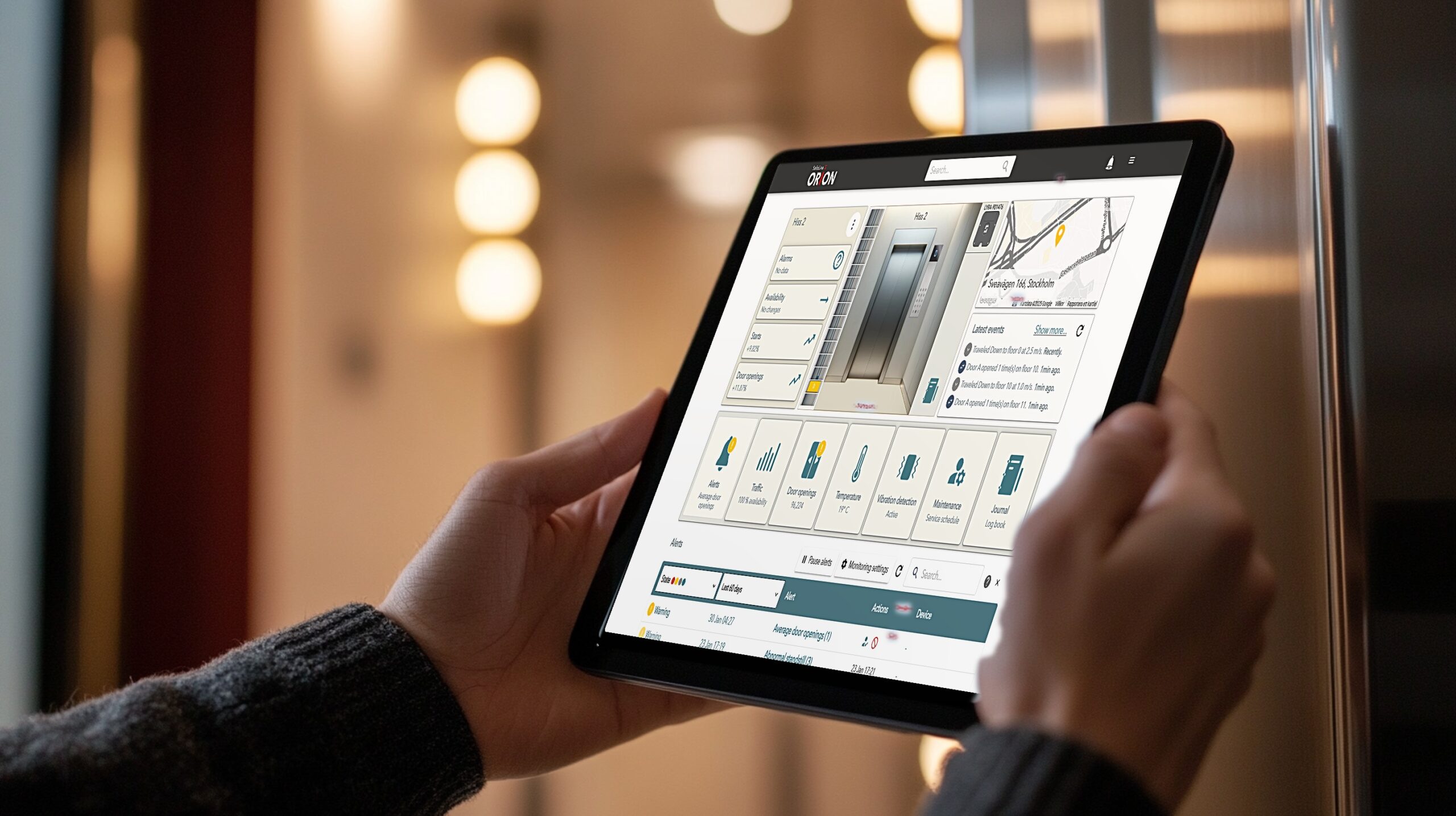
SafeLine offers controllers, I/O products, displays and accessories for CANopen-Lift applications. SafeLine NOVA2 is developed for CANopen-Lift and is available for traction and hydraulic lifts. Its 5.5-inch touchscreen provides access to configuration, network information and diagnostic functions.Through SafeLine Orion, the NOVA controller platform provides remote access to system status, event logs and supported configuration functions. These capabilities can help technicians investigate faults, prepare service interventions and reduce unnecessary site visits.What do SafeLine CANopen-Lift products mean for you?
We offer a broad range of controllers, I/O boards and displays designed to simplify installation, commissioning and maintenance while reducing costs throughout the entire lifetime of the lift.SafeLine's CANopen Competence Center in Tessenderlo, Belgium, supports lift companies working with CANopen-Lift with local stock, training and technical support.Contact SafeLine to discuss the right CANopen-Lift components and controller for your next installation or modernisation project.
Frequently asked questions
What is CAN bus?
CAN bus (Controller Area Network) is a serial communication network that lets electronic devices exchange messages over a shared connection. Bosch introduced it in 1986, and it is defined in the ISO 11898 series.
What does CAN bus stand for?
CAN stands for Controller Area Network. “Bus” means that the devices share the same communication connection.
What is the difference between CAN bus and CANopen?
CAN provides the underlying communication technology: message transmission, bus access and error detection. CANopen builds on CAN with standardised ways to configure devices, exchange operating data, manage the network and report errors.
What is CANopen-Lift?
CANopen-Lift is the CANopen application profile for lift control systems, published by CAN in Automation as the CiA 417 series. It defines lift-specific functions, described as virtual devices, and the communication between them.
What is CiA 417?
CiA 417 is the specification series that defines CANopen-Lift. It specifies virtual devices, process-data messages and the communication relationships between them.
Why do lifts use CAN bus?
A shared bus can reduce signal wiring and simplify installation, and CANopen provides standardised error messages that help technicians investigate faults. The benefits depend on the selected devices and the network design.
Can CANopen-Lift devices from different manufacturers work together?
Standardised interfaces make it easier to combine compatible components from different suppliers. The products must still support the functions and configuration the project needs, and a generic CANopen interface is not, by itself, confirmation of CANopen-Lift compatibility.
Is CAN bus the same in cars and lifts?
The underlying CAN technology is the same. The higher-layer protocols differ: many lift control systems use CANopen and the CiA 417 profile.