This catches many property owners off guard. The service contract covers the maintenance work. It does not transfer the duty of care. Under UK regulations, the building owner — or the organisation with control of the equipment — remains the duty holder. That accountability stays with you whether or not you have visibility into what is actually happening inside your lifts.
This guide sets out who carries responsibility under UK law, what that responsibility actually requires, and how to demonstrate compliance independently of your service provider.
What lift compliance in the UK actually means
Lift compliance is governed by a small number of clear regulations.
The Lifts Regulations 1997 govern the safety and design of new lift installations. The Lifting Operations and Lifting Equipment Regulations 1998 (LOLER) require a thorough examination of every passenger lift at least every six months by a competent person. The Provision and Use of Work Equipment Regulations 1998 (PUWER) cover ongoing safe use and maintenance. EN 81-28 sets the requirement for two-way emergency voice communication – including the verified three-day test call that confirms the system is working.
These are not optional. They apply to every passenger lift in a workplace or a building used by the public. The Health and Safety Executive (HSE) enforces them.
Who is responsible for lift compliance in a building?
The building owner is responsible for lift compliance in a building. This is the position under UK law whether the lift is in a commercial property, a residential block, or a mixed-use development.
The exact title varies — freeholder, managing agent, responsible person, duty holder — but the legal substance is consistent. The person or organisation with control of the lift is accountable for ensuring it meets every applicable regulation. The lift service company carries out the work. The building owner carries the responsibility.
This matters most at the point of an incident. A failed inspection, an entrapment, an HSE notice — the duty holder is the first party answerable.
How SafeLine Orion supports property owners →
Where the burden of proof actually sits
If something goes wrong, the question is not whether the service company turned up. The question is whether you can demonstrate that the lift was maintained, tested, and verifiably operational at every relevant point.
In a routine year, that proof comes from service reports. In an incident, those same reports — written by the party doing the work — face scrutiny. Independent, time-stamped data carries more weight than a contractor's account of their own visit.
This is the gap most building owners discover too late.
Three questions every property owner should be able to answer
- When did the emergency telephone last complete a successful three-day test call? EN 81-28 requires this every 72 hours. The record should be automatic and time-stamped.
- What was the longest period of unplanned downtime on any of your lifts in the past 90 days? Service reports rarely show this clearly. Continuous monitoring does.
- Could you produce a complete maintenance log — every visit, every action, every date — within 24 hours of an HSE request? If the answer is "we would have to ask the contractor", you do not own the record.
If any of these answers are uncertain, the gap is not in your contractor's work. It is in your ability to see it.
How independent visibility changes the position
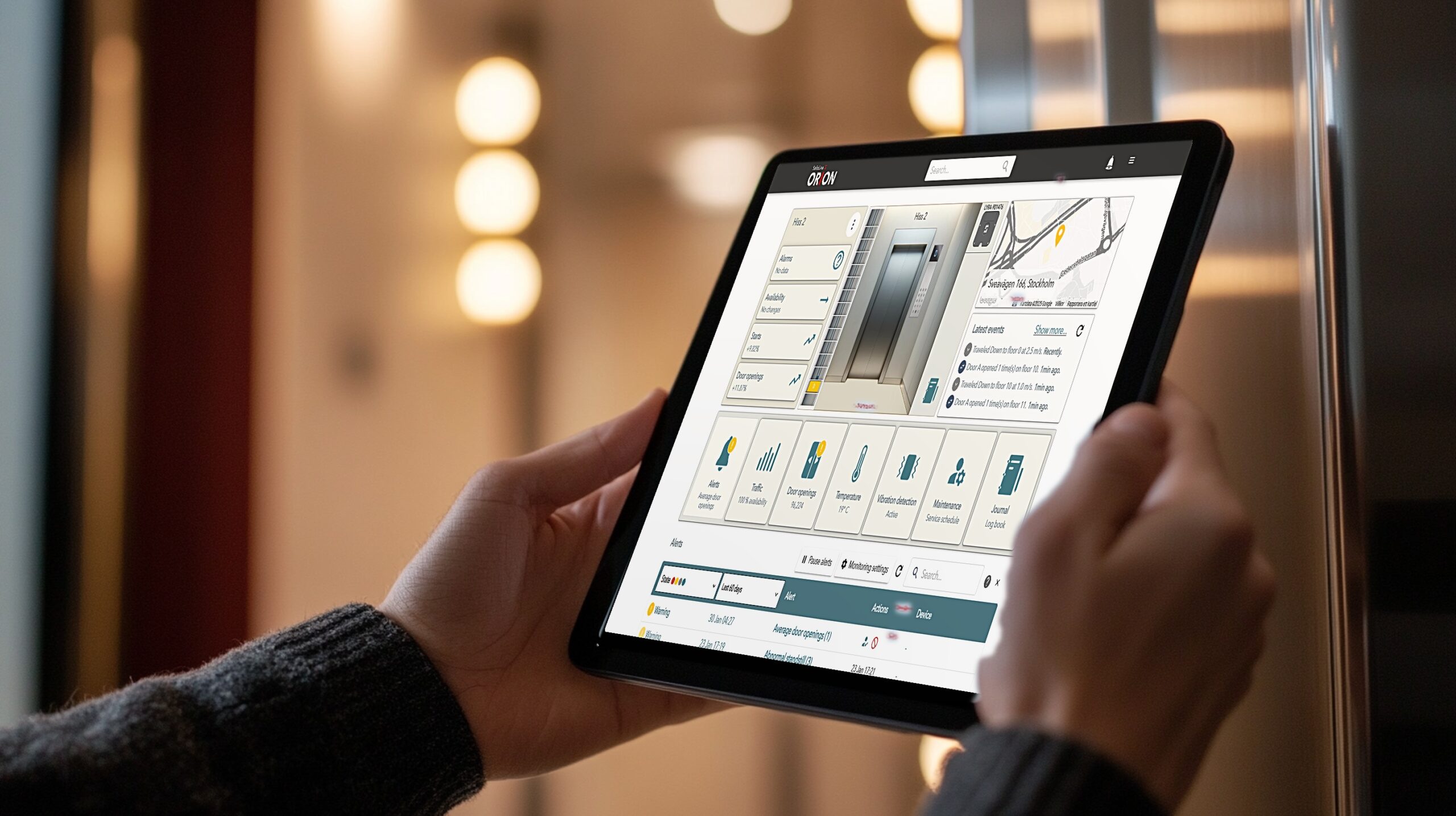
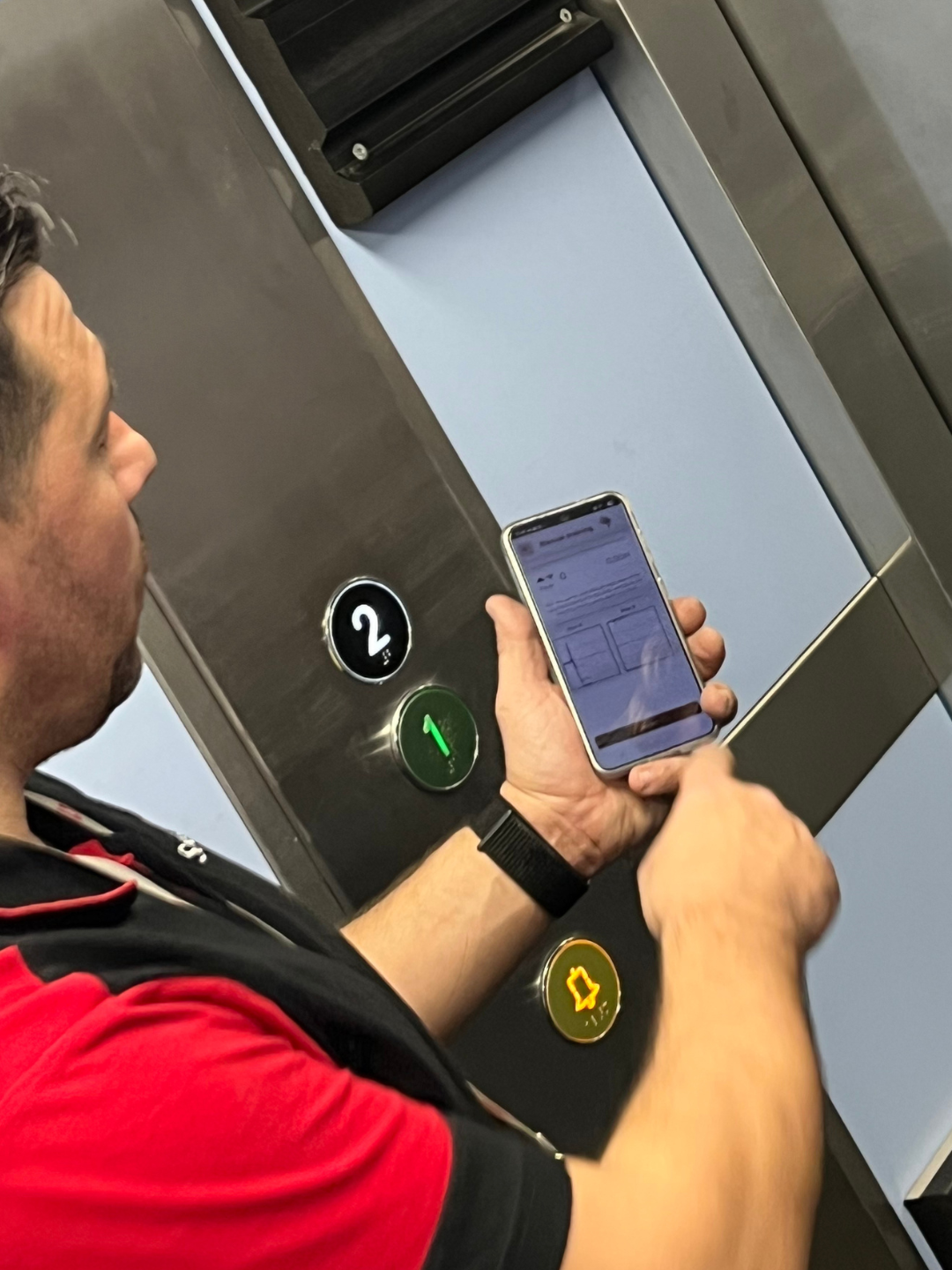
SafeLine Orion gives property owners a real-time view of every lift across their portfolio. It works with all lift brands and all ages, through SafeLine hardware on the lift car roof and emergency communication unit. It is browser-based — no software to install.
Three things change when monitoring is independent:
- The data belongs to you, not your contractor. Orion stores faults, alerts, maintenance activity, and compliance records under your account. If you change service provider, the data stays.
- EN 81-28 three-day test calls are automated and logged. Every test, every result, time-stamped in the Orion Cloud. Free for SafeLine SIM users.
- Fault alerts arrive in real time. You hear about a problem before your tenants do — not from a service report written days later.
Orion does not connect to the lift's core control system. There is zero cybersecurity risk to the lift itself. The platform is NIS2 and GDPR compliant.
What this looks like in practice
A facilities manager opens Orion on a Monday morning. Two lifts in the portfolio show fault alerts from over the weekend. One has been resolved remotely by the service provider; the platform shows the action and time-stamp. The other is still open — and the FM has a verified record of when it was reported, what was reported, and how long it has been outstanding.
The same view shows every successful EN 81-28 test call from the past 30 days, logged automatically. No manual collection. No reliance on a service report.
This is what shifting the burden of proof looks like. Not more reporting — better records, generated by the system itself.
Read how Lift Service Totaal uses SafeLine Orion →
What to do next
If you are not certain whether your current setup meets EN 81-28 — or whether you could prove it within 24 hours — start by reviewing your three-day test call records.
If they are missing, incomplete, or live only inside your contractor's system, the right next step is independent monitoring.
See Orion in action — book a demo →
Frequently asked questions
Who is responsible for lift compliance in a building?
The building owner is responsible for lift compliance in a building. Under UK regulations including LOLER 1998 and the Lifts Regulations 1997, the person or organisation with control of the lift — typically the freeholder, managing agent, or duty holder — remains legally accountable. The service company carries out the maintenance, but the building owner carries the legal responsibility.
How is EN 81-28 compliance demonstrated?
EN 81-28 compliance is demonstrated through verified, time-stamped records of three-day test calls and continuous emergency communication availability. SafeLine Orion automates these test calls every 72 hours and logs every result, giving building owners an independent, audit-ready record without manual collection.
Can lift compliance be automated?
Yes. The EN 81-28 three-day emergency test call can be automated through SafeLine Orion, which performs and logs the test every 72 hours without manual intervention. Maintenance logging, fault alerting, and portfolio-wide performance reporting are also automated within the platform.
How can a property owner monitor lift performance independently?
A property owner can monitor lift performance independently using SafeLine Orion, a brand-independent cloud platform that connects to all lift types through SafeLine hardware. Data ownership stays with the property owner, separate from the lift service provider's reporting. The platform requires no software installation and works across portfolios of any size.
Does the lift service provider handle compliance?
The lift service provider handles maintenance and inspection work, but does not hold legal responsibility for compliance. Under UK regulations, that responsibility remains with the building owner or duty holder. Service contracts cover the work, not the duty of care.
What records does a property owner need to keep for lift compliance?
A property owner needs to keep records of: six-monthly LOLER thorough examinations, ongoing PUWER maintenance, EN 81-28 emergency communication test results, fault history, and any reported incidents. Records must be available for inspection by the HSE on request. Independent platforms such as SafeLine Orion store these records under the property owner's account rather than the contractor's.
Is lift monitoring GDPR compliant?
SafeLine Orion is GDPR compliant and meets NIS2 cybersecurity requirements. The platform does not connect to the lift's core control system. Personal data is handled in line with EU and UK data protection law.
What happens if a lift fails an EN 81-28 test call?
If a lift fails an EN 81-28 test call, the emergency communication is not verified as working — and the lift may need to be taken out of service until the issue is resolved. SafeLine Orion flags failed test calls in real time, so building owners and service providers can act before the lift becomes non-compliant.
Does Orion work with all lift brands?
Yes. SafeLine Orion is brand-independent. It connects to all lift types and ages through SafeLine hardware installed on the lift car roof and emergency communication unit. There is no manufacturer lock-in.