Real-time data from each lift identifies the patterns that lead to failure, weeks before the lift stops running. You see the fault forming. You decide what to do. Your service provider gets a head start.
The cost of reactive maintenance is hidden in plain sight
A breakdown isn't a single event. It starts with a tenant call. Then a contractor is mobilised. A same-day truck roll. An extended downtime window. A missed compliance log. And – for the property owner – a service report that arrives in the inbox after everyone else in the building already knows what happened.
Every layer of this carries cost. The direct repair. The premium charged for an emergency callout. The disruption to occupants. The slow erosion of tenant confidence. The compliance gap that gets papered over after the fact.
The model persists because it suits the parties who already operate inside it. The lift company gets paid for callouts. The reporting, such as it is, runs through the contractor. The property owner is the party with the most to lose and the least visibility – and is asked to take the rest on trust.
For most building owners, this is the unspoken bargain: pay a service contract, hope it works, find out otherwise from the people in the lobby.
Predictive maintenance breaks that loop. The lift tells you what's coming. You move from reacting to deciding.
How predictive maintenance works on a lift
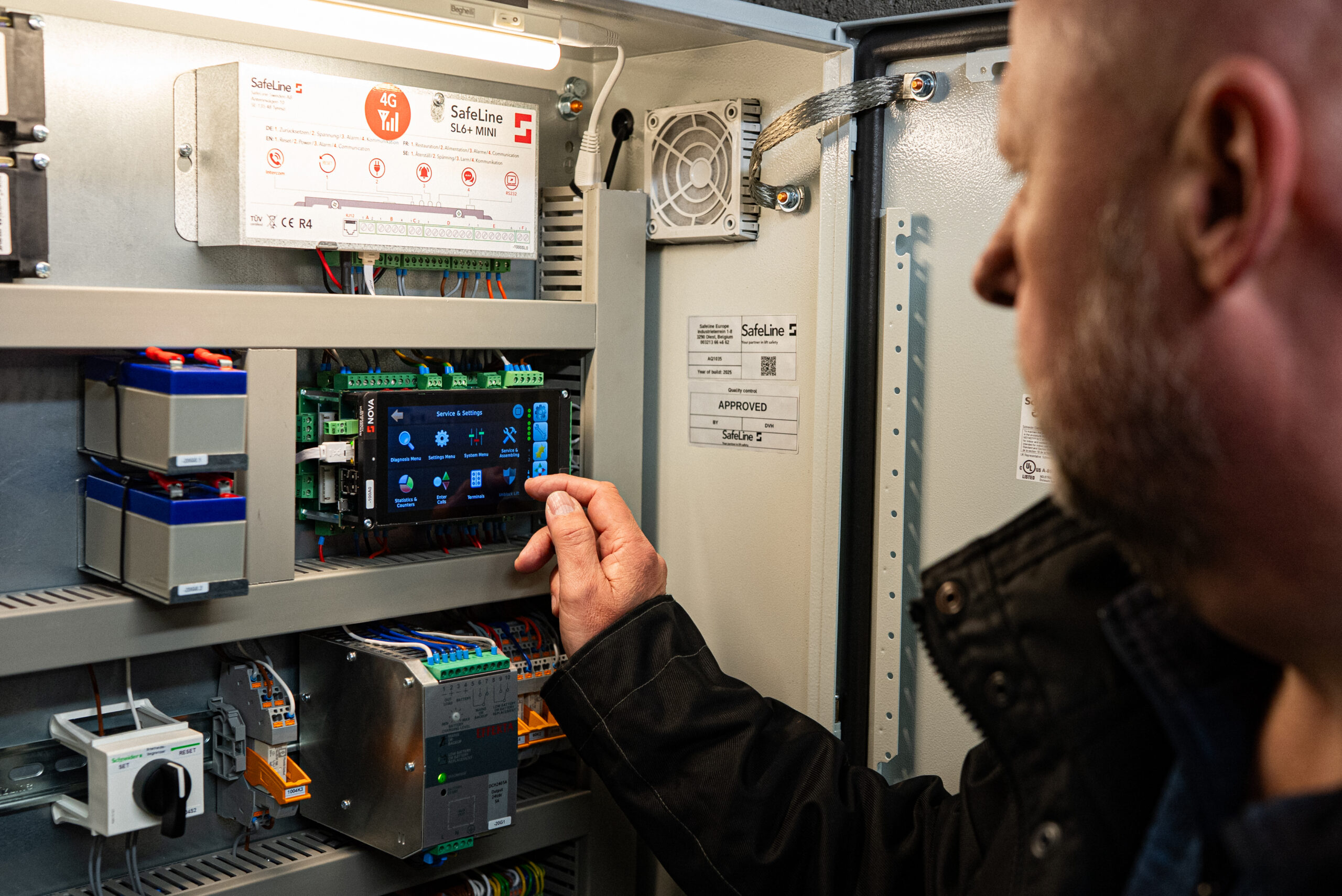
SafeLine LYRA is a sensor unit installed on the lift car roof. It does not connect to the lift's control system – there is no cybersecurity risk and no interference with lift operation. It collects movement, vibration, door cycle, positioning, and braking data continuously, sample by sample, twenty-four hours a day.
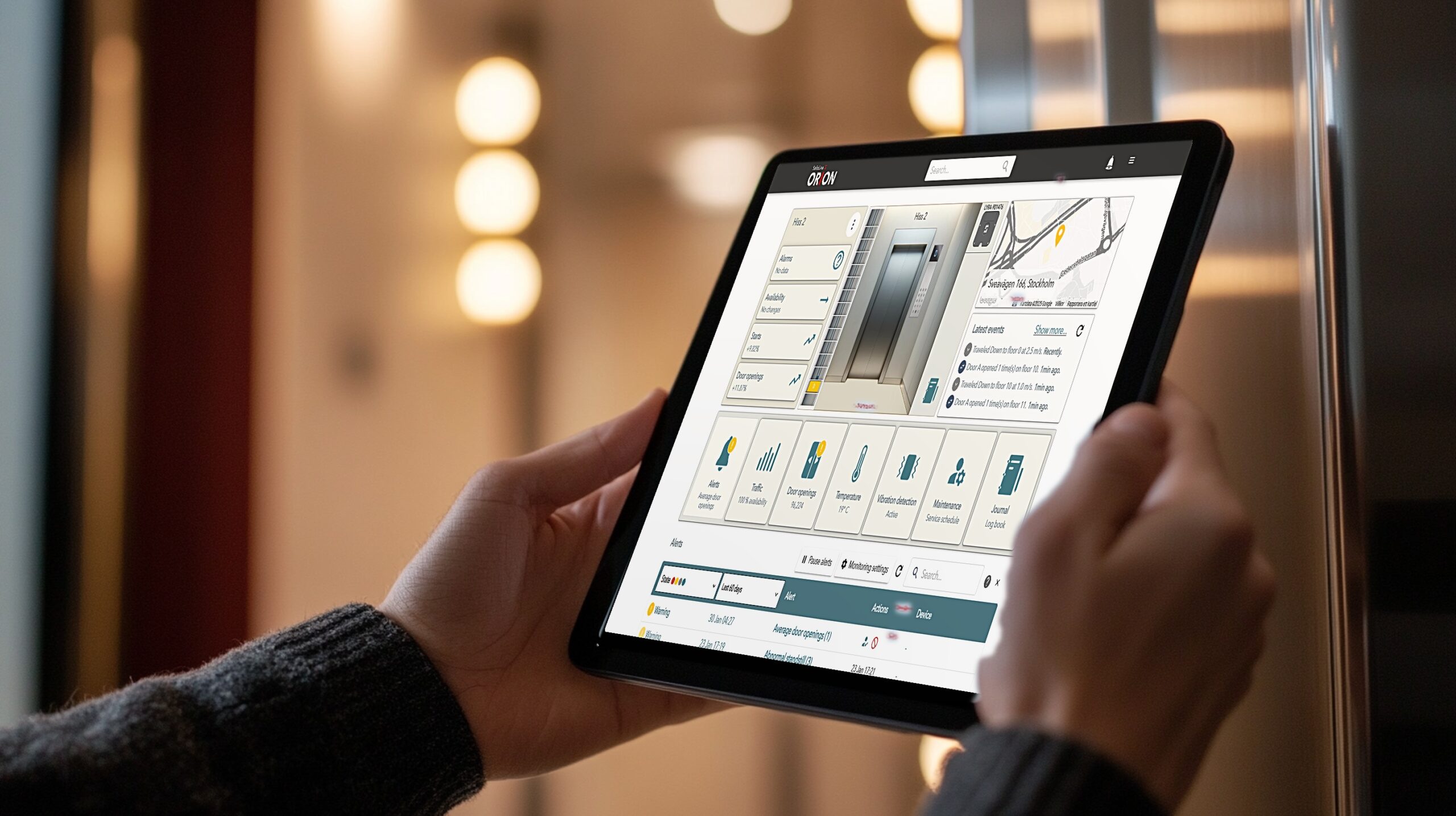
That data is sent to SafeLine Orion in real time. Inside Orion, machine learning models compare incoming data against patterns built from thousands of lift cycles across the SafeLine customer base. When a pattern starts to drift – a door cycle that takes a fraction of a second longer than it should, a braking event with a higher vibration signature, a positioning error that has begun to grow – the platform flags it.
These are the faults that schedule-based maintenance routinely misses. A six-month service interval cannot catch a bearing that began to degrade three weeks ago. Continuous monitoring can.
LYRA works on any lift, regardless of brand, age, or controller. Installation takes under an hour and requires no modifications to the lift itself. You keep your existing service provider. You add a layer of visibility they cannot turn off.
Predictive maintenance, smart maintenance, condition-based maintenance – what’s the difference?
The terms overlap. In practice, they describe the same shift: away from fixed-schedule servicing, towards maintenance triggered by what the lift is actually doing.
Predictive maintenance uses continuous data and pattern recognition to forecast faults before they happen. The platform identifies that a component is degrading and flags it for service while the lift is still running normally.
Smart maintenance – sometimes called smart lift maintenance – is the broader term. It covers any maintenance approach that uses connected sensors, real-time data, and automated reporting to replace manual inspection routines. Predictive maintenance is one form of smart maintenance. Real-time fault alerting and automated EN81-28 compliance logging are others.
Condition-based maintenance is the engineering term for servicing components based on their measured condition rather than elapsed time. It is the principle underneath both predictive and smart maintenance.
SafeLine Orion delivers all three from the same platform. The lift is monitored continuously. Anomalies are flagged before they become breakdowns. Compliance evidence is generated automatically. Service is triggered by the lift’s actual condition – not by a calendar.
For most building owners, the practical question is not which term applies, but whether the maintenance model still depends on a tenant noticing the problem first. With smart maintenance in place, it doesn’t.
What changes when predictive monitoring is in place
The first thing most building owners notice is that they hear about faults differently. The early warning of a developing fault – typically weeks before the lift would have failed – arrives as a notification in the Orion dashboard, not as a complaint from a tenant. That alone shifts the operating posture from defensive to informed.
Beyond that, six things change in practical terms:
- Independent verification of what the service provider is reporting. Every callout, every service action, every test call is logged with a timestamp. You see what was done, when, and by whom.
- Real-time alerts delivered to whoever needs them – facilities team, service provider, or both, with different thresholds for each.
- Lift-by-lift performance data across the whole portfolio. Which lifts are running hot. Which have recurring fault patterns. Which are quietly healthy.
- Automated EN81-28 3-day test call logging–compliance proof generated as part of normal operation, not retrofitted before an audit.
- A complete service history stored independently of any single supplier portal. If the service provider changes, the history stays.
- Trend data over time– so the question stops being "is this lift OK today" and starts being "is this lift trending the right way."
None of this replaces the service relationship. It standardises what gets measured, who sees it, and what evidence exists when something happens.
Proof point: a London shopping centre
A central London shopping centre installed LYRA across its lift portfolio. Within months, the data revealed a recurring root-cause fault that had been generating intermittent callouts for years. The fault was real and measurable, but it never appeared at the moment a service engineer happened to be on site. Routine inspections found nothing wrong. The lift always seemed to be working.
Continuous monitoring caught the pattern that periodic inspection could not. The root cause was identified, the fault was fixed once, and the callouts stopped. Maintenance costs across the affected lifts dropped significantly. Tenant complaints stopped.
The data was always there. Nothing was monitoring it.
Where predictive monitoring fits alongside existing maintenance
A common concern, particularly from property owners with long-standing service relationships, is whether predictive monitoring is meant to replace the contract. It is not. The two work alongside each other, and they answer different questions.
The scheduled service contract answers: is the lift being maintained at the agreed cadence, by qualified people, against documented checklists? That work is necessary, regulated, and not what predictive monitoring is for.
Predictive monitoring answers a different question: between the scheduled visits, what is the lift actually doing? Where is performance drifting? What pattern of small anomalies indicates that a component is approaching failure? This is the layer that schedule-based maintenance, by design, cannot see.
In practice, building owners who add monitoring almost always continue with their existing service provider – and the relationship usually improves. The data gives the engineer something concrete to work on when they arrive. Callouts become more efficient. Recurring faults get isolated and fixed once instead of patched repeatedly. Both sides of the relationship end up with better information.
The single decision is who owns the data. With SafeLine Orion, the property owner does. That choice – made up front, not after the fact – is what removes the information asymmetry the old model relied on.
See what your own portfolio would look like in Orion –book a demo →
Seeing it on your own portfolio
The platform runs in the browser. There is nothing to install. A short demo shows what your reporting looks like, how alerts work in practice, and the difference between a portfolio that is monitored and one that is not.
This platform works alongside real-time lift monitoring and multi-brand lift monitoring– all three capabilities run from the same SafeLine Orion dashboard.
See Orion in action – book a demo →
Part of the complete guide to lift monitoring– the topical hub covering real-time monitoring, predictive maintenance, and multi-brand monitoring from one platform.
Frequently asked questions
How can predictive lift maintenance reduce downtime?
Predictive maintenance detects developing faults before they cause a breakdown. By analysing real-time movement, vibration, and door cycle data, SafeLine Orion identifies anomalies – irregular braking, abnormal door behaviour, drift in positioning – that indicate a component is starting to fail. The lift is serviced before it stops running. Across customer portfolios, this shifts maintenance from reactive callouts to planned interventions, eliminating most unplanned downtime.
What is the ROI of predictive maintenance for lifts?
The return comes from three places: fewer emergency callouts, lower repair costs from catching faults early, and reduced tenant disruption. A single avoided breakdown in a commercial building can cover several months of monitoring. In one London shopping centre, a root-cause fault that had generated callouts for years was identified within months of installing SafeLine LYRA. After it was fixed, maintenance costs across the affected lifts fell significantly.
How does predictive maintenance improve building safety?
Predictive maintenance shortens the window between a fault developing and being addressed. Components rarely fail without warning – they degrade. Real-time monitoring catches that degradation. Combined with automated EN81-28 3-day test call logging via SafeLine Orion, building owners get continuous evidence that emergency communication is working, that the lift is performing within tolerance, and that every event is logged.
What are the benefits of predictive maintenance for facilities managers?
A facilities manager managing lifts without monitoring is dependent on three sources of information: tenant complaints, scheduled service reports, and the lift itself when it stops. SafeLine Orion replaces all three with a single dashboard. Real-time fault alerts. A complete log of every contractor visit. Performance reports generated automatically. The job stops being reactive.
Which sensors are required for predictive lift maintenance?
SafeLine LYRA is a single non-invasive sensor unit installed on the lift car roof. It uses micro-sensors and vibration technology to monitor movement, positioning, door cycles, and braking behaviour. It does not connect to the lift's control system. No additional sensors, no modifications to the lift, no certification implications. Installation takes a service engineer under an hour.
How is predictive maintenance different from a scheduled maintenance contract?
Scheduled maintenance assumes faults appear on a calendar. Predictive maintenance assumes faults appear when components degrade – which they do, continuously, regardless of the service schedule. A scheduled contract still has a place. Predictive monitoring runs alongside it, flagging the faults the schedule cannot catch and giving the service provider the data to fix them on the first visit.
How does smart lift maintenance work?
Smart lift maintenance combines continuous sensor monitoring, cloud-based data processing, and automated alerting to replace manual inspection routines. SafeLine LYRA collects movement, vibration, door cycle, and braking data from each lift and streams it to SafeLine Orion. The platform surfaces faults in real time, flags developing problems for planned service, and logs every EN81-28 compliance event automatically. The result is fewer breakdowns, less reactive callouts, and a verifiable record of how each lift is performing – without depending on a manual logbook or a service report after the fact.
Does SafeLine Orion work with my existing lift service provider?
Yes. SafeLine Orion is independent of any lift manufacturer or service provider. The data goes to you. You decide who sees it. Most building owners share the dashboard with their existing service provider – it makes their job easier, and the relationship more accountable. SafeLine does not replace your service contract. It removes the information gap that exists alongside it.
Is predictive lift monitoring a cybersecurity risk?
No. SafeLine LYRA installs on the lift car roof and has no connection to the lift's control system. Orion has no path into core lift operation. The platform is NIS2-compliant and GDPR-compliant by design. Your lift cannot be reached through SafeLine, by anyone.