Whether you own the buildings or service the lifts, you are getting information after the fact. Property owners wait for the monthly service report. Lift companies depend on callouts to understand what is actually happening between visits. SafeLine Orion changes that – for both. Every event, every fault, every compliance test call streams to your Orion dashboard at the moment it occurs. You stop waiting for the report. You read the operation as it runs.
The problem with after-the-fact reporting
The reporting model that most building owners – and many lift service companies – operate inside is built around the contractor's visit. Once a month, sometimes once a quarter, a service report arrives. It says what was done. It often does not say what was not done – what trends are forming, what callouts almost happened, what compliance windows have slipped quietly. Between visits, visibility is functionally zero. A lift either runs or it doesn't. If it stops, someone in the lobby phones the FM team. If it doesn't stop, the assumption is that everything is fine. That assumption is doing a lot of work. A lift that has been drifting outside performance tolerance for weeks looks identical to a healthy lift right up until the moment it doesn't. The first signal in the after-the-fact model is failure itself. Real-time monitoring changes the timing. You see the drift as it forms. You see the fault as it develops. You see the test call as it runs. The reporting frame stops being "what happened last month" and starts being "what is happening now, and what trend is it on."How real-time lift monitoring works
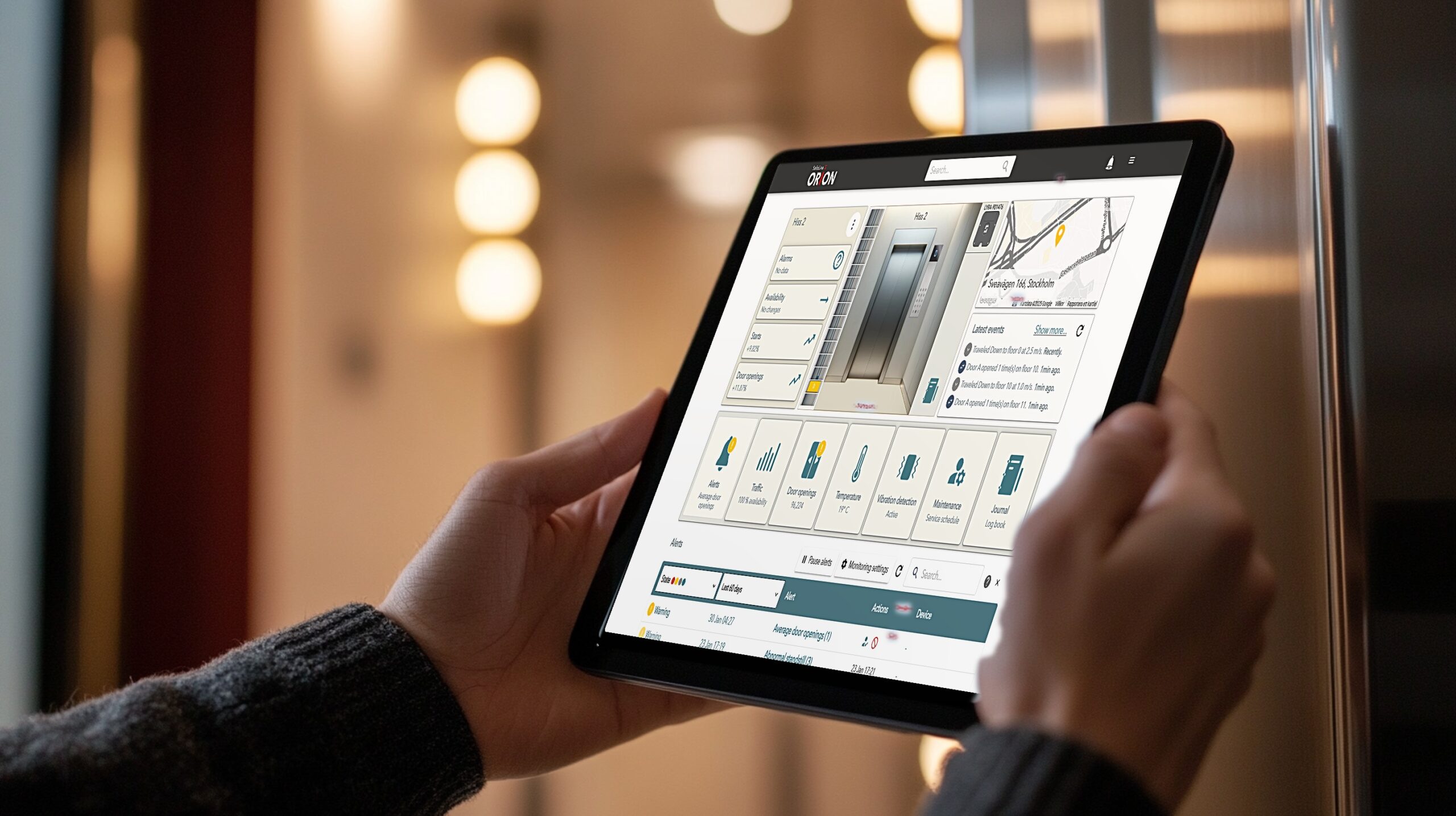
SafeLine LYRA– a sensor unit installed on the lift car roof – streams operational data to SafeLine Orion continuously. Movement, vibration, door cycles, positioning, braking, ride quality, sample by sample, around the clock. The data path runs over a managed mobile connection so monitoring works even where the building network is intermittent or absent. In Orion, this stream surfaces in two ways. The dashboard displays current state per lift across the whole portfolio – running, idle, fault, in service. Alerts trigger on configurable thresholds: a vibration spike above tolerance, a door cycle that exceeds expected duration, a positioning error, a missed test call, an extended downtime event. Each alert is routed according to rules the building owner sets – facilities team, service provider, or both, with different priorities for each. See our real-time lift monitoring system. None of this connects to the lift's control system. LYRA is observation only. There is no command path into core lift operation, no integration risk, no cybersecurity exposure. The platform is NIS2-aligned and GDPR-compliant by design. The setup is non-invasive and brand-independent. LYRA installs in under an hour on any lift, regardless of manufacturer, age, or controller. The lift continues operating as it always has. The only thing that changes is what you can see.What changes when monitoring runs in real time
The most immediate change is alert timing. A developing fault – a door sensor starting to misread, a brake action running at the edge of tolerance, a positioning drift that is widening – now generates a notification at the moment the data shifts. Not at month's end. Not after the lift fails. Now. Beyond alert timing, real-time monitoring shifts six operational realities:-
- Live performance per lift– every lift in the portfolio visible on one dashboard, with current state, running uptime, and recent event history.
-
- Service call validation– when the service engineer arrives, leaves, and what was done is recorded automatically. The visit is no longer something you take on faith.
-
- Continuous compliance evidence– the EN81-28 3-day test call is logged automatically, every cycle, with timestamp. Audit prep stops being a manual exercise.
-
- Trend visibility– patterns over days, weeks, and months become visible because the data is continuous, not sampled at service intervals.
-
- Configurable alert routing– different thresholds for different stakeholders. The FM team sees everything; the service provider sees only what they need to act on; senior management sees only what crosses a defined severity line.
-
- Portfolio benchmarking– which lifts in your estate are running hot, which have recurring faults, which are quietly healthy. The comparison is objective and current, not anecdotal.
For lift companies specifically
Real-time monitoring also transforms what a lift service company can offer. Instead of reporting on what happened during a visit, the engineer arrives with a complete picture of everything that occurred between visits – alert history, trend data, and performance benchmarks – before the van leaves the depot. Callouts become more targeted. Repeat visits to the same fault drop sharply. The service company operating from real-time data can demonstrably prove its performance to clients, not just assert it.Real-time monitoring and EN81-28 compliance
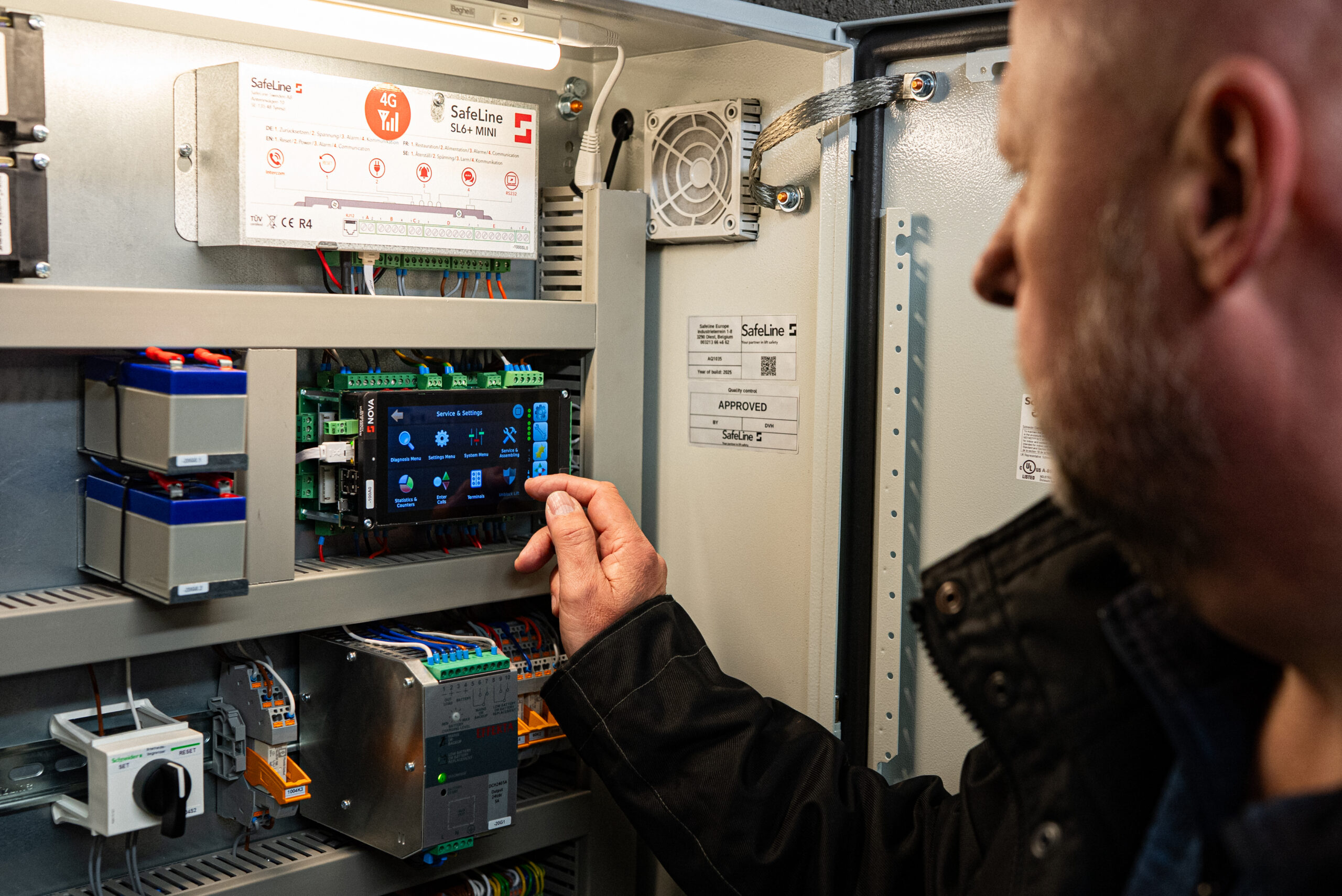
EN81-28 requires that the emergency communication in every lift is tested and proved functional at intervals not exceeding three days. In most operations, this is a manual or semi-manual process – a logbook, a service entry, a spreadsheet maintained by the FM team, an audit trail that gets reconstructed when needed. Real-time monitoring removes the manual layer. When SafeLine SL6, the emergency telephone, is paired with SafeLine SIM and Orion, the 3-day test call runs automatically. Each call is logged with timestamp, result, and audit reference. The compliance evidence is generated as part of normal lift operation, not retrofitted before an inspection. The same applies to alarm events. A genuine emergency call from a lift cabin is logged in Orion alongside the routine test calls. Audit and incident review work from a single record, not from a service portal owned by the lift company. For property owners managing multiple buildings, this is the difference between proving compliance lift by lift, manually, and exporting a compliance report covering the whole portfolio. The work that used to take weeks before an audit takes minutes.Where real-time monitoring fits with the service relationship
A reasonable question from any building owner with a long-standing service contract is whether installing independent monitoring will create friction with the service provider. In practice, it almost never does. For lift companies, the question is different – whether real-time monitoring changes what clients expect. In practice, it raises the bar in ways that well-run service operations welcome. The service relationship runs on trust and information. Most of the friction in those relationships comes from the information half being unbalanced – the service provider knows what they did and why, and the owner is asked to take it on trust. Real-time monitoring rebalances that. Both parties work from the same data. Disagreements get resolved by reference to the record, not by negotiation. For the service engineer, real-time data is usually welcome. The engineer arrives with context – what was happening on the lift, when it started, what the alert pattern suggests. Callouts get more efficient. Recurring faults get isolated and fixed once instead of patched repeatedly. The engineer's job becomes easier, not harder. The single non-negotiable is data ownership. With SafeLine Orion, the data belongs to the building owner. The owner decides who sees it. The service provider gets the access they need to do their job; they do not control the record. That choice – made up front – is what makes the transparency sustainable. Lift companies that integrate Orion into their service offering gain a competitive advantage that is difficult to replicate without the underlying data. The ability to produce verified, real-time performance reports for every client site – proactively, not in response to complaints – is what separates a monitoring-first service operation from a traditional one.See your own lifts in real time – book a demo →
Part of the complete guide to lift monitoring– the topical hub covering real-time monitoring, predictive maintenance, and multi-brand monitoring from one platform.