Lift monitoring, end to end.
What lift monitoring actually is
Lift monitoring, at its simplest, is the layer of visibility between scheduled service visits. A traditional service contract gives the building owner information once a month, or once a quarter, after the fact. Lift monitoring closes that gap. Sensors on the lift report what the lift is doing – continuously – to a platform that the building owner can see, query, and act on.
The category covers four overlapping practices:
- Real-time monitoring– live operational state, fault alerts as they happen, automated compliance logging
- Predictive maintenance– using continuous data to detect developing faults before they cause breakdowns
- Portfolio management– consolidating data from multiple lifts and multiple buildings into a single view
- Compliance evidence– automated logging of regulatory requirements such as the EN81-28 3-day test call
These practices are not separate products. They are different uses of the same continuous data stream – the difference between asking "what is the lift doing now," "what is it about to do," "how is it performing across the estate," and "can I prove it was operating safely." A complete lift monitoring platform supports all four. SafeLine Orion does.
Who lift monitoring is for
Property owners are accountable for lift uptime, tenant satisfaction, and regulatory compliance – but typically have no direct visibility into how the lifts in their portfolio are performing. They depend on their service provider to tell them, which creates an information gap that lift monitoring closes. For property owners, the value of monitoring is independence: they own the data, they see what is happening, and they can verify what their service provider is doing.
Facilities managers sit operationally between the owner and the service provider. They handle tenant complaints, schedule maintenance, and generate reports for senior management. For them, monitoring shifts the job from reactive to informed – fault alerts arrive before tenant complaints do, contractor performance becomes evaluable, and compliance reporting becomes automated rather than manual.
Lift service companies are increasingly offering monitoring as a value-added service layer to their customers. For them, the operational benefit is that callouts become more efficient because the engineer arrives with data, recurring faults are identified at root cause, and customer relationships become more transparent.
All three groups can work from the same platform. SafeLine Orion supports owner, FM, and service provider as separate users with configurable access – same data, different views.
How lift monitoring works on a lift
Lift monitoring requires three components: a sensor on the lift, a connection to the cloud, and a platform that processes the incoming data and surfaces it to the user.
The SafeLine implementation uses SafeLine LYRA– a sensor unit installed on the lift car roof. LYRA observes the lift externally: movement, vibration, door cycles, positioning, braking, and ride quality. Critically, it does not connect to the lift's control system. There is no command path into the lift's core operation, no integration with controller firmware, and no cybersecurity risk to the lift itself.
LYRA streams data over a managed mobile connection –SafeLine SIM– to SafeLine Orion, the cloud platform. The mobile connection means monitoring works whether or not the building has reliable network infrastructure, and whether or not the existing service provider permits access to building IT.
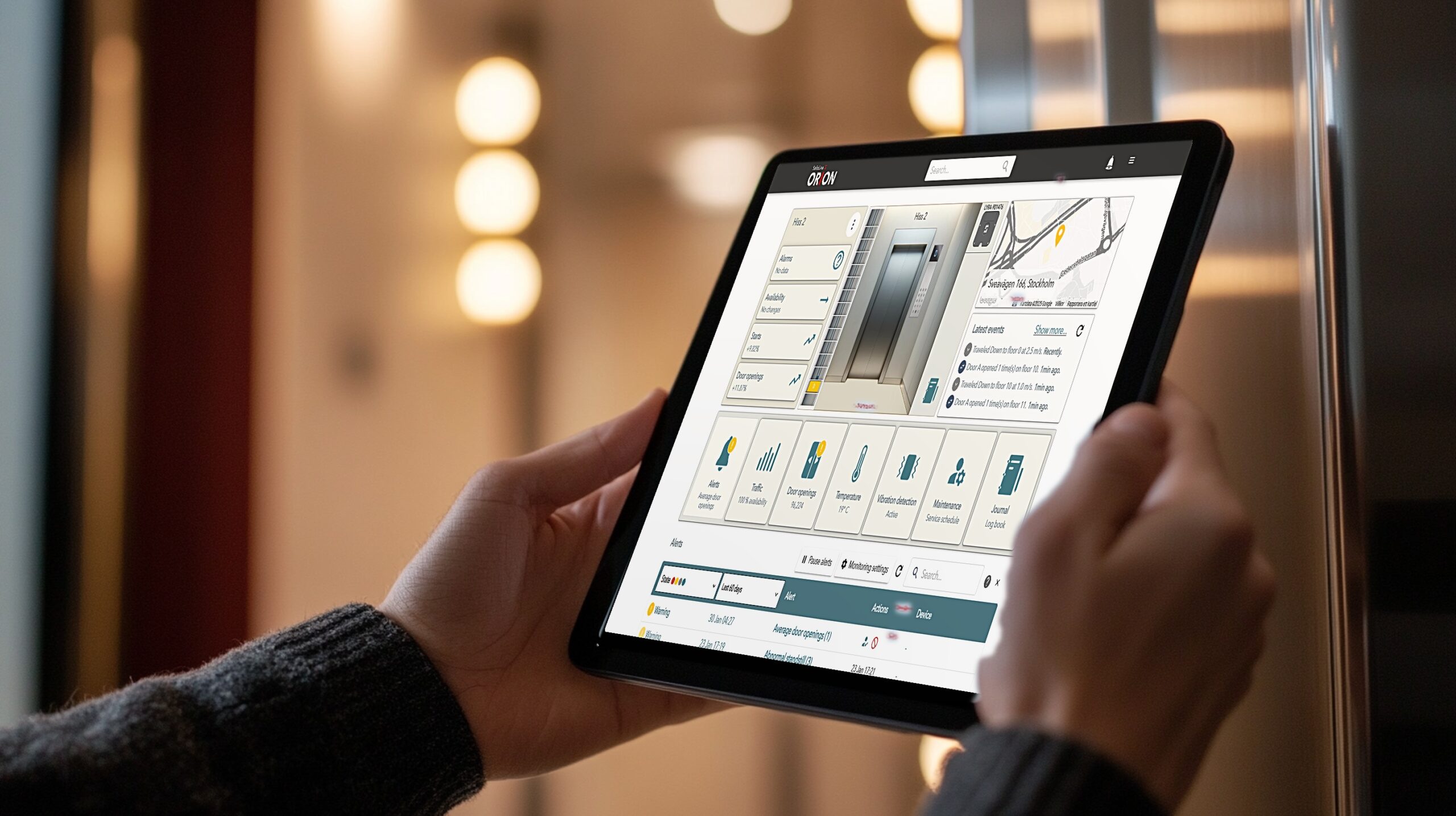
The Orion platform processes the incoming data in two ways. First, it surfaces current state – every lift across the portfolio shown as running, idle, in fault, or in service, with configurable real-time alerts. Second, it applies machine learning to detect anomaly patterns that indicate developing faults – vibration signatures changing over time, door cycles drifting outside tolerance, positioning errors that are slowly growing. These are the faults that schedule-based maintenance routinely misses.
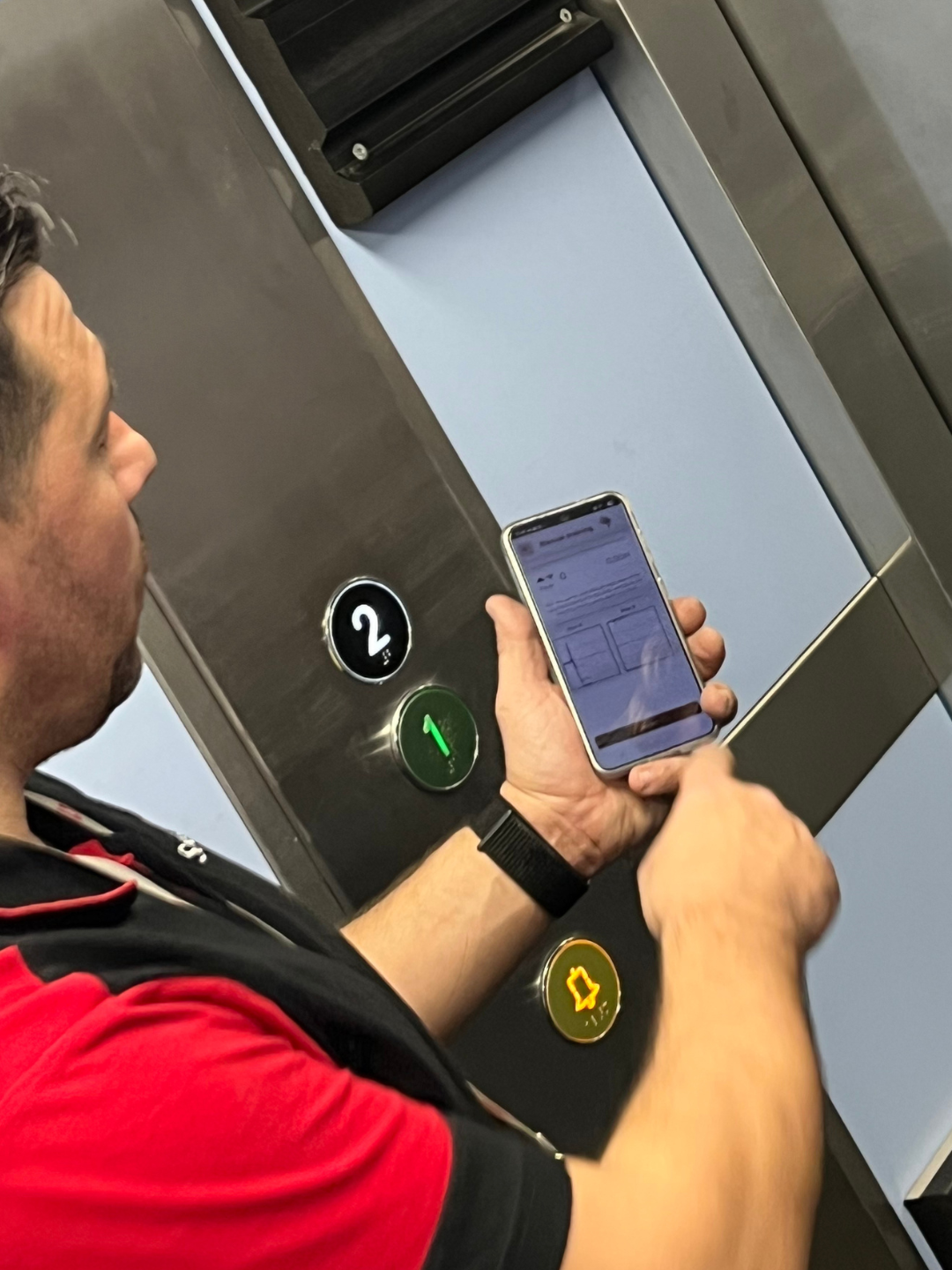
The whole system installs in under an hour per lift, on any lift, regardless of manufacturer, age, or controller type. The lift continues to operate exactly as before. The only thing that changes is what you can see.
Three ways to get value from lift monitoring
The deeper applications of lift monitoring break down into three practices, each addressed in detail on its own page.
Real-time monitoring
Real-time monitoring is what most people picture when they think of lift monitoring: a dashboard showing the current state of every lift in the portfolio, alerts that fire when something goes wrong, and a continuous log of compliance events such as EN81-28 3-day test calls. The shift from after-the-fact reporting to live operational visibility is the most immediate change a property owner notices when monitoring goes in.
Read the full guide to real-time lift monitoring →
Predictive maintenance
Predictive maintenance uses the same continuous data stream to detect developing faults before they cause a breakdown. Anomaly patterns – irregular braking, door cycles drifting outside tolerance, positioning errors growing slowly – flag components that are starting to degrade. The lift can be serviced before it stops running. Across customer portfolios, this shifts maintenance from reactive callouts to planned interventions.
Read the full guide to predictive lift maintenance →
Multi-brand monitoring
Most commercial portfolios run lifts from multiple manufacturers, but most monitoring platforms are tied to a specific manufacturer's hardware. SafeLine Orion is brand-independent – it works on any lift, regardless of who built it. For portfolios assembled over years of acquisitions, this is often the difference between a partial monitoring solution and a complete one.
Read the full guide to multi-brand lift monitoring →
Compliance and lift monitoring
Lift monitoring intersects with regulatory compliance most directly through EN81-28, the European standard for lift emergency communication. EN81-28 requires that every lift's emergency communication is tested and proved functional at intervals not exceeding three days.
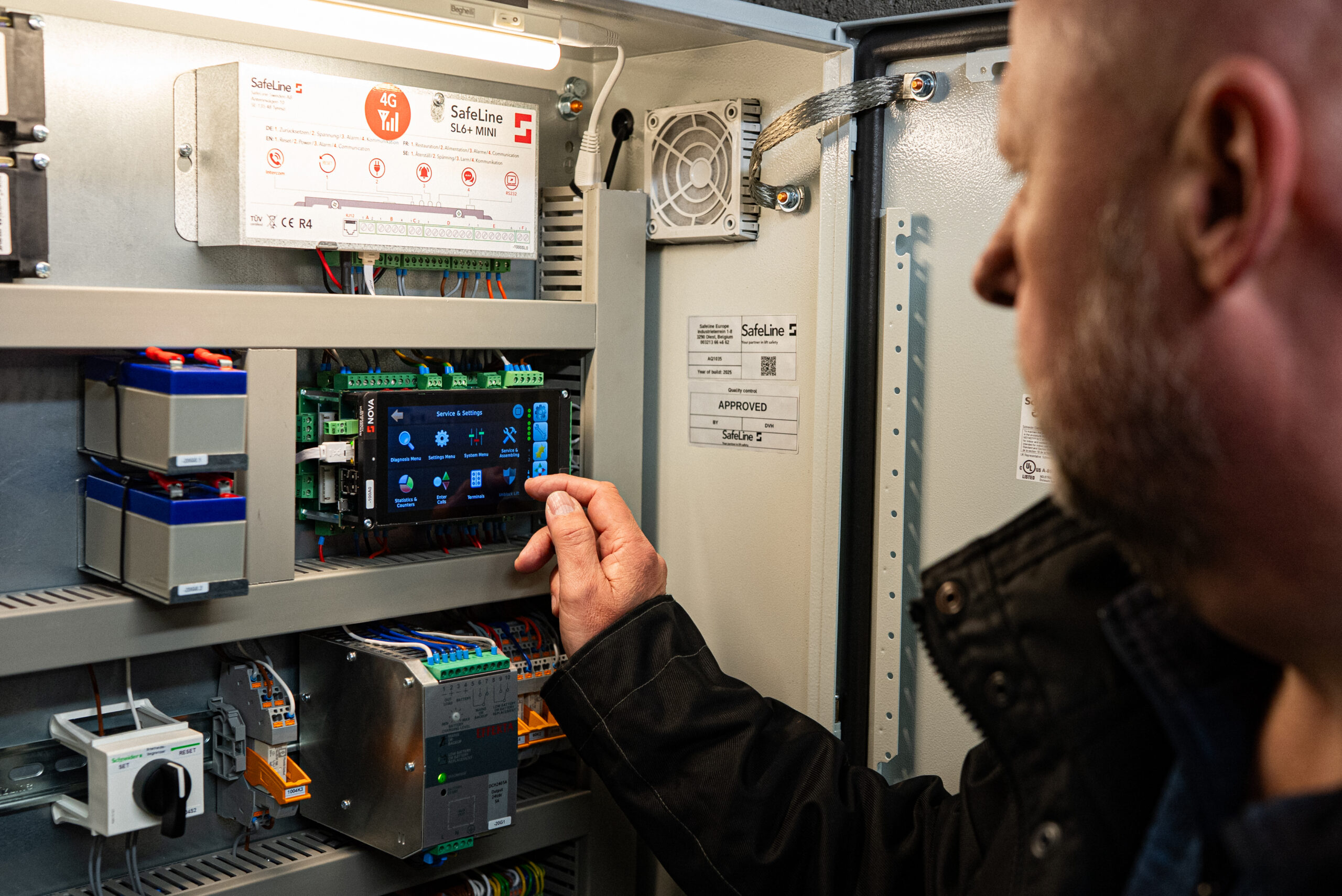
In a traditional setup, this is a manual or semi-manual process – a logbook, a service entry, a spreadsheet maintained by the facilities team. With SafeLine SL6 (the emergency telephone), SafeLine SIM (the connectivity layer), and SafeLine Orion (the monitoring platform) deployed together, the 3-day test call runs automatically. Every call is logged with timestamp and result. Compliance evidence is generated as part of normal operation – not retrofitted before an audit.
Lift monitoring also produces evidence for the broader regulatory environment: NIS2 (cybersecurity for connected building infrastructure), GDPR (data ownership and processing), and emerging requirements under the EU Smart Readiness Indicator. SafeLine Orion is NIS2-aligned and GDPR-compliant by design, with no connection to the lift's control system and full data ownership retained by the building owner.
Choosing a lift monitoring system
Building owners and facilities managers evaluating a lift monitoring system should look for the following:
- Brand independence. The platform should work on any lift type, regardless of manufacturer or age. Manufacturer-tied platforms only see their own lifts, which leaves most mixed portfolios with fragmented coverage.
- Non-invasive installation. The sensor should observe the lift externally, not connect to its control system. This eliminates cybersecurity risk and removes any requirement for OEM certification or manufacturer cooperation.
- Data ownership. The building owner should retain ownership of the operational data. Platforms tied to a service provider or manufacturer can create lock-in that makes the data difficult to transfer if the building is sold or the service contract changes.
- Compliance support. Automated EN81-28 3-day test call logging should be a built-in feature, not an add-on. The platform should generate audit-ready evidence as part of normal operation.
- Portfolio scaling. The platform should support both single-building and multi-building portfolios from the same interface, with configurable alerts and reporting per user.
- Browser-based access. No installation, no specialist software, no dependency on a particular operating system. Lift monitoring is an operational tool – it should be accessible the way any other operational tool is accessible.
SafeLine Orion meets all six criteria. The platform is purpose-built around the building owner's perspective, with the service provider integrated as a configurable user rather than as the data owner.
See what your own portfolio would look like in Orion – book a demo →
Frequently asked questions
What is lift monitoring?
Lift monitoring is the continuous observation of lift operation between scheduled service visits. Sensors on the lift report movement, vibration, door cycles, and other operational data to a cloud platform, which surfaces faults, generates alerts, and produces compliance evidence. SafeLine Orion is a complete lift monitoring platform that works on any lift, regardless of brand or age, with full data ownership retained by the building owner.
How does a lift monitoring system work?
A lift monitoring system uses a sensor installed on the lift to collect operational data, transmits that data to a cloud platform over a network connection, and processes it to surface current state, faults, and trends. The SafeLine implementation uses SafeLine LYRA on the lift car roof, SafeLine SIM for connectivity, and SafeLine Orion as the cloud platform. The sensor observes the lift externally and does not connect to the lift's control system.
Why do property owners need lift monitoring?
Property owners need lift monitoring because the traditional service contract model gives them visibility only after the fact, filtered through the service provider. Lift monitoring provides independent, real-time visibility – fault alerts before tenant complaints, automated compliance evidence, and a verifiable record of every contractor visit. For owners with multiple buildings, monitoring also provides a single dashboard view across the entire portfolio.
What is the difference between lift monitoring and predictive maintenance?
Lift monitoring is the broader category – it covers real-time state, alerts, compliance logging, and portfolio reporting. Predictive maintenance is one application of lift monitoring data, specifically the use of machine learning to detect anomalies that indicate a component is starting to fail. A complete monitoring platform supports both: live operational visibility and predictive analysis. SafeLine Orion delivers both from the same platform.
Does lift monitoring work on older lifts?
Yes. SafeLine LYRA is designed to work on lifts of any age – including lifts more than thirty years old. The sensor is installed externally on the lift car roof and does not require modern controllers, manufacturer support, or upgraded electrical systems. For older lifts, monitoring often delivers the highest operational value because they are typically the ones with the least visibility today.
Is remote lift monitoring secure?
Yes. SafeLine LYRA observes the lift externally and has no connection to the lift's control system. SafeLine Orion has no command path into the lift's core functions. The platform is NIS2-aligned and GDPR-compliant by design. The connection between LYRA and Orion runs over a managed mobile network with end-to-end encryption.
How much does lift monitoring cost?
Lift monitoring is typically priced per lift, per month, with hardware costs separate. Pricing varies based on portfolio size, contract term, and the specific features included. The relevant comparison is rarely the platform cost itself, but the value generated – avoided emergency callouts, reduced tenant disruption, automated compliance preparation, and the ability to evaluate service contract performance objectively. A demo is the most direct way to estimate the return on a specific portfolio.
What is the best lift monitoring platform?
The best lift monitoring platform for a given building or portfolio depends on three factors: whether the platform works across all the lift brands in the portfolio, whether the building owner retains data ownership, and whether the platform generates the compliance evidence the property requires. SafeLine Orion is brand-independent, owner-owned, and produces EN81-28-compliant evidence automatically. For mixed-fleet portfolios in particular, brand independence is the deciding factor.