Tighter compliance requirements and the expectation of near-zero downtime are pushing service companies toward predictive maintenance for lifts. It is no longer a future ambition. It is available today.
SafeLine LYRA and Orion work together to enable predictive lift maintenance.
The problem with reactive maintenance
In a reactive model, lifts are serviced on a fixed schedule — whether they need it or not. Problems go undetected until something fails. The call comes from a tenant or building manager, not from your monitoring system.
The operational impact is significant. According to real-world data from SafeLine systems, up to 25% of all service visits are unnecessary — meaning technician hours and scheduling capacity are being spent on lifts that did not need attention. At the same time, faults that were developing quietly go unresolved until they cause a breakdown.
The risk of staying reactive is not just operational. A lift that fails unexpectedly affects tenants, triggers SLA penalties, and in some cases creates liability. For lift companies, the reputational cost of an avoidable breakdown is often harder to recover from than the callout itself.
For lift companies managing large portfolios, the pattern is familiar: repeat visits to the same lift, engineers arriving without the right parts, and clients calling to ask why the same fault keeps coming back. Each unnecessary visit is a scheduling problem. Each repeat callout is a client relationship at risk. And without data, it is difficult to explain what happened — or prove what you did about it.
What predictive lift maintenance actually means in practice
Predictive maintenance for lifts is not a theory — it is a specific capability built on two components that work together.
SafeLine LYRA — the data collector
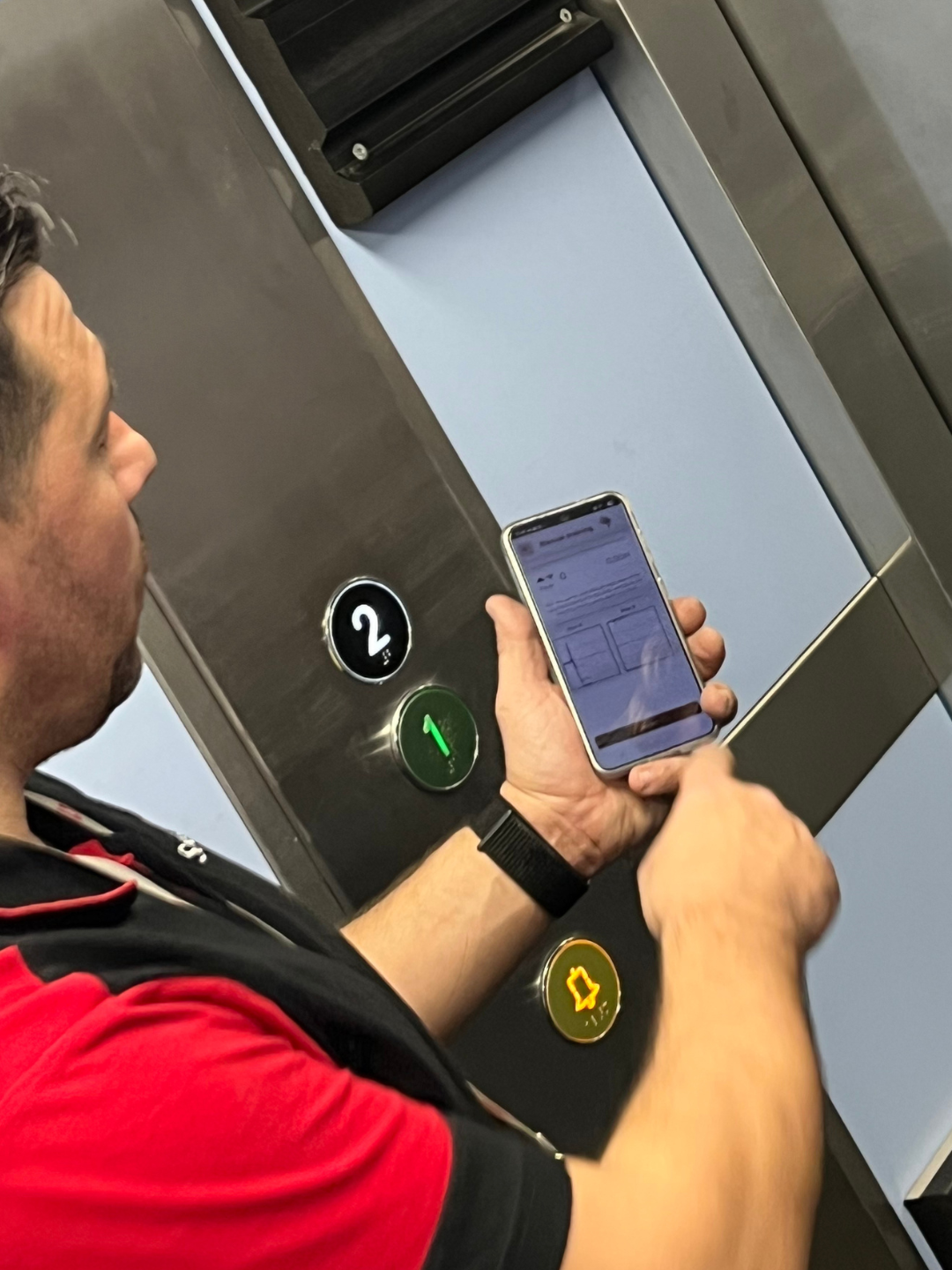
LYRA installs on the lift car roof in under an hour — no connection to the lift’s control system, no modifications to existing equipment, no OEM negotiation required. That means it works on any lift, any brand, any age. A portfolio of 50 lifts across three different manufacturers is covered by a single platform from day one. For lift companies, that is the difference between a solution that works across your entire client base and one that only works on part of it.
SafeLine Orion — the monitoring platform
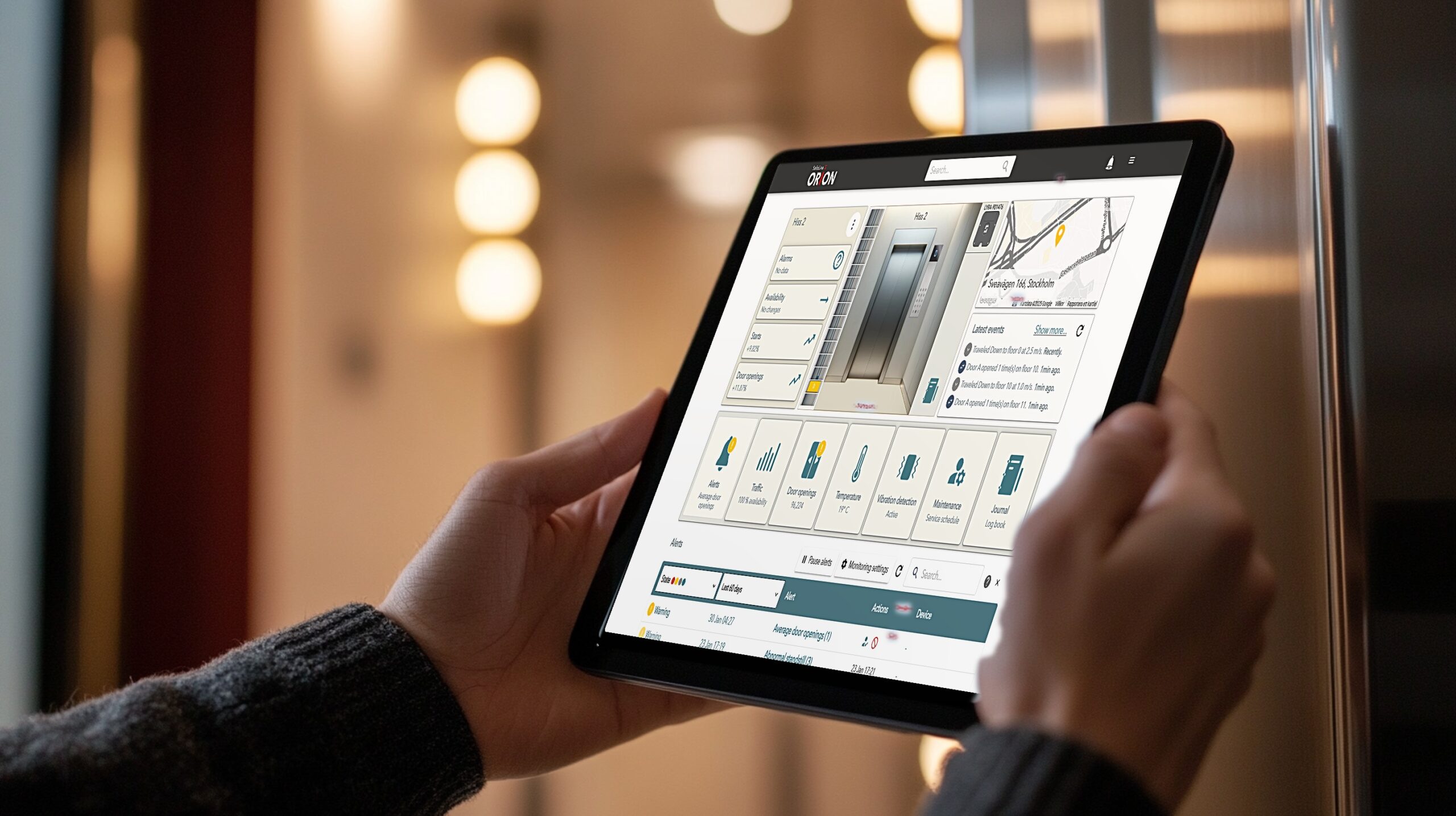
The data LYRA collects is transmitted in real time to SafeLine Orion, where machine learning builds an individual performance baseline for each lift — not an industry average, but a profile specific to that lift’s usage pattern, environment, and behaviour. When Orion flags something, it is because that lift is behaving differently from how it normally behaves — not because it crossed a generic threshold. Your team can investigate and act before it becomes a breakdown.
Orion is not limited to LYRA as a data source. It also integrates with SafeLine SL6 and SafeLine SIMs — giving lift companies flexibility in how they connect their portfolio to the platform, depending on the equipment already in place.
What makes SafeLine different
- Non-invasive install — no connection to the control system, no modifications, no risk to existing safety systems
- Any lift, any brand — works across mixed portfolios regardless of manufacturer or age
- You own the data — the data belongs to you and your client, not the OEM. That independence is what makes it possible to offer monitoring as a service your company owns and controls, rather than something you resell on a manufacturer’s terms
- Per-lift machine learning — individual baselines, not generic thresholds
The result: fewer emergency callouts, more planned visits, and maintenance work that is carried out because it is actually needed.
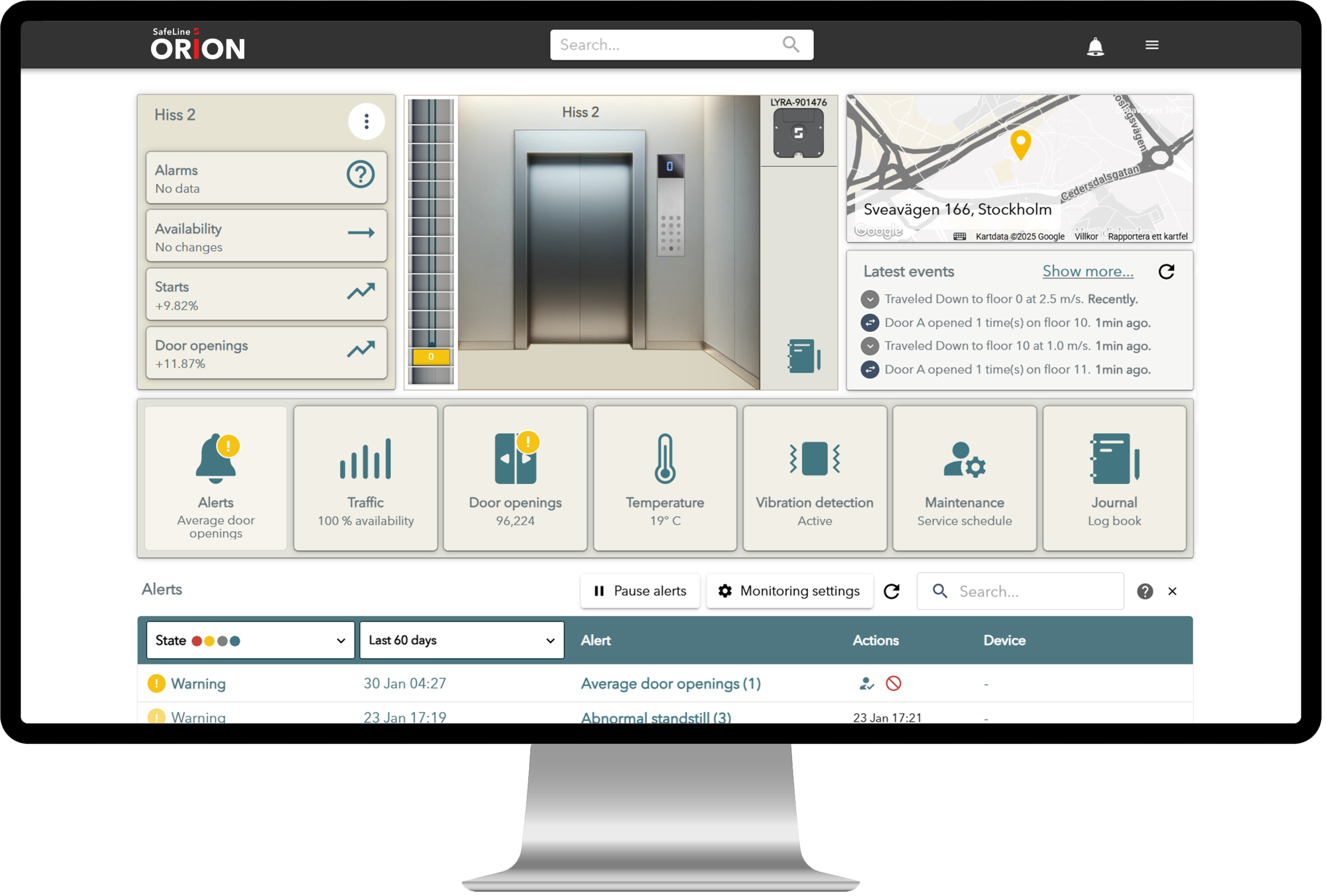
SafeLine Orion gives your team real-time visibility across every lift in the portfolio.
EN81-28 compliance — without the manual overhead
For lift companies, EN81-28 compliance is non-negotiable. The standard requires regular testing of emergency communication systems — and that testing must be logged and demonstrable.
In a reactive model, this often means manual tracking, spreadsheets, and the risk of gaps in the audit trail. SafeLine Orion automates 3-day test calls and logs every result, timestamped and stored in the platform. Compliance is no longer something you manage manually — it is something you can prove, on demand, to any building owner or auditor.
For SafeLine SIM users, automated 3-day test calls are included at no additional charge. And because SIMs integrate directly with Orion, compliance data sits alongside your full monitoring picture — in one platform, not spread across separate systems.
The difference in practice — a London case study
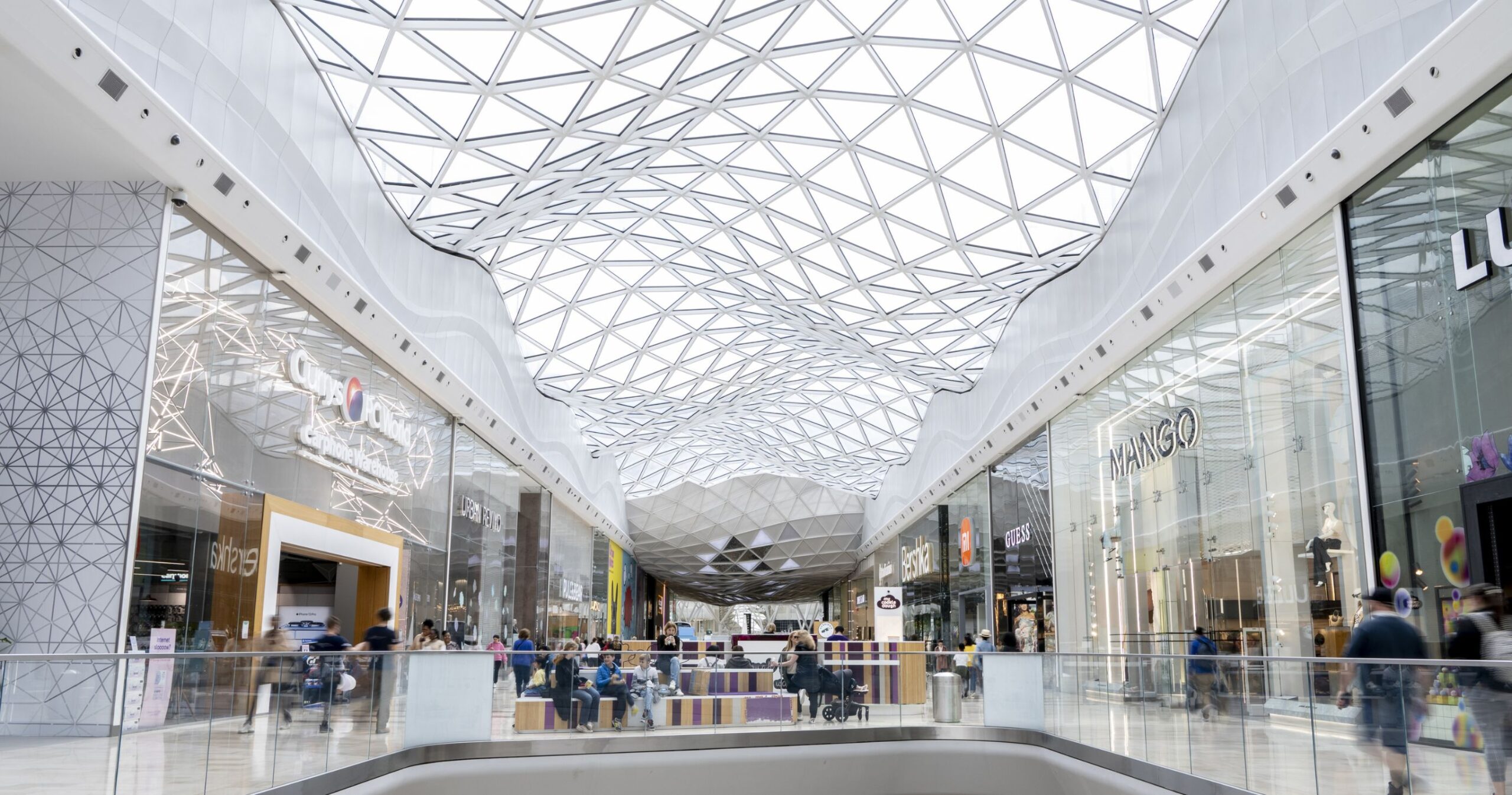
A prominent shopping centre in central London was experiencing persistent lift issues: frequent unexplained trips and increased wear on components. The maintenance team had been managing reactively for years, carrying out routine visits without resolving the root cause.
After installing SafeLine LYRA, the team identified a fault that had been developing undetected. Following the repair, the site saw a 40% reduction in emergency callouts and freed up over 200 technician hours annually for planned work.
What this means for your service operation
Shifting from reactive to predictive lift maintenance changes how your team works at every level.
A service manager opening Orion on Monday morning sees the current status of every lift in the portfolio — which are performing within baseline, which have active anomalies, and which have been flagged for follow-up.
A technician dispatched to site already knows what Orion detected, when it started, and what the trend looks like. They arrive prepared, not reactive. If the fault is resolved, Orion confirms it. If the pattern continues, it escalates.
For clients, that visibility translates directly into trust. Service reports are backed by data. Anomalies are flagged before they become complaints. And when a contract comes up for renewal, you can show exactly how you have been managing their assets — not just tell them.
Repeat callouts to the same lift — one of the clearest signs of reactive maintenance — become visible and addressable before they become a pattern.
For lift companies that offer monitoring services to building owners, SafeLine Orion also provides the reporting layer your customers need: performance data, maintenance logs, and compliance records — all independently owned by the building owner, not locked to any manufacturer or service provider.
Getting started
SafeLine LYRA installs on the car roof — no connection to the lift's control system, no modifications to existing equipment. Compatible with all lift brands and types.
SafeLine Orion is browser-based — no software installation required. We handle full onboarding based on just a few initial details, and our team provides lifetime technical support so you are never left to figure it out alone.
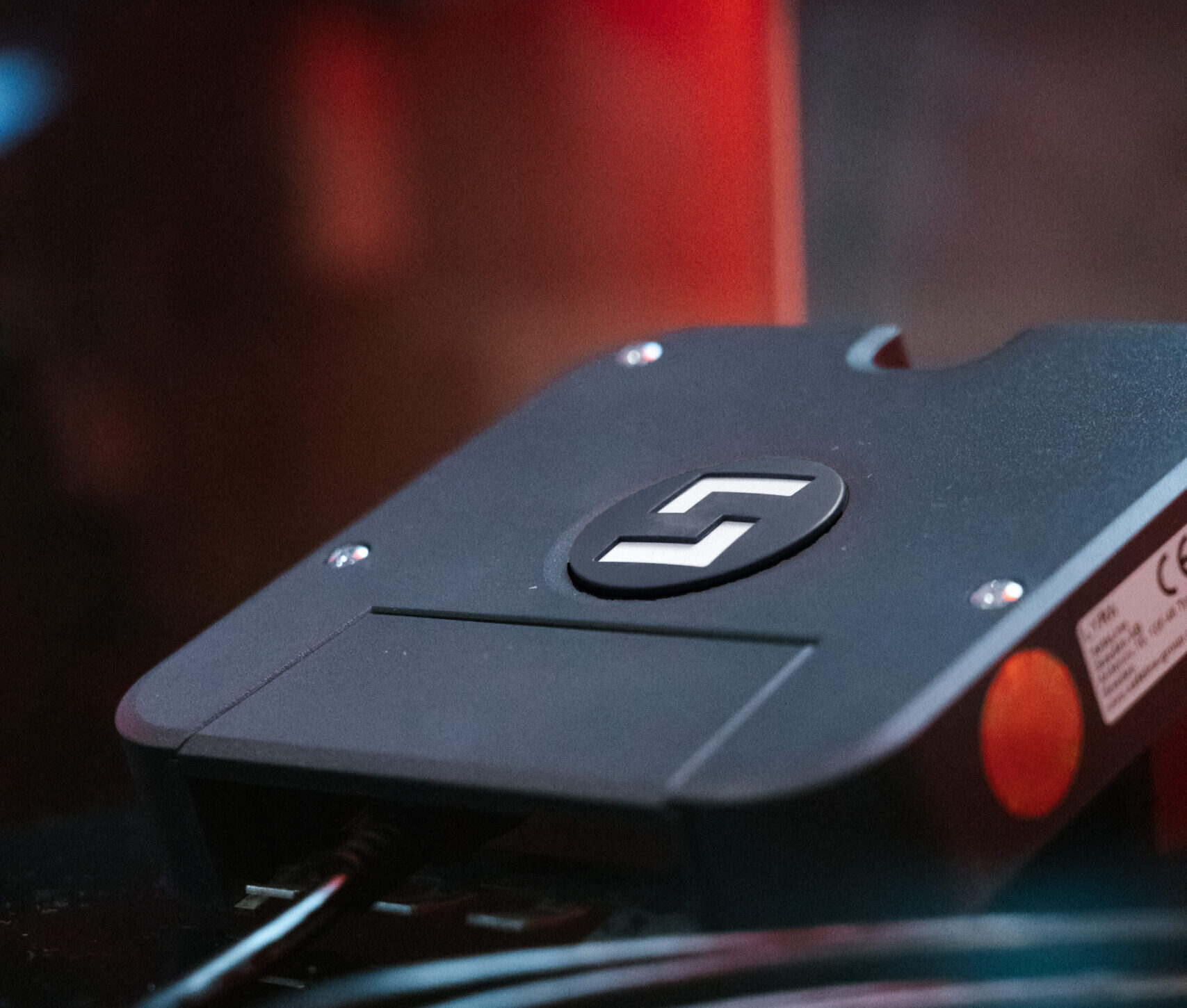
A SafeLine technician installing LYRA on the lift car roof — no connection to the control system required.
Frequently asked questions
SafeLine LYRA collects real-time operational data from the lift car roof using micro-sensors and vibration technology. SafeLine Orion applies machine learning to identify patterns and anomalies — flagging developing faults before they cause a breakdown, without requiring any connection to the lift's control system.
Yes. SafeLine LYRA installs on the car roof and operates entirely independently of the lift's existing control and safety systems. There is no cybersecurity risk to the lift, and no modifications are required.
SafeLine LYRA and SafeLine Orion are brand-independent. They work with all lift types and manufacturers, regardless of age. A single Orion platform can monitor an entire mixed-brand portfolio.
SafeLine Orion automates 3-day emergency communication test calls and logs every result with a timestamp. For SafeLine SIM users, this is included at no additional cost.
Yes. By detecting anomalies early, SafeLine LYRA enables planned interventions before faults lead to breakdowns. One SafeLine customer reduced emergency callouts by 40% following installation.